
MedReach Gulf · Aftercare for patients in Muscat
Pain After Root Canal in Muscat: What’s Normal & When to Get Help
Your tooth has been treated, but it still hurts. The useful question is not just how many days have passed—it is whether the pain is settling, what triggers it and whether anything else has changed.
This guide is for adults recovering in Muscat, including people whose treatment was started elsewhere. Use it to prepare for a conversation with your dentist, not to diagnose the tooth yourself.
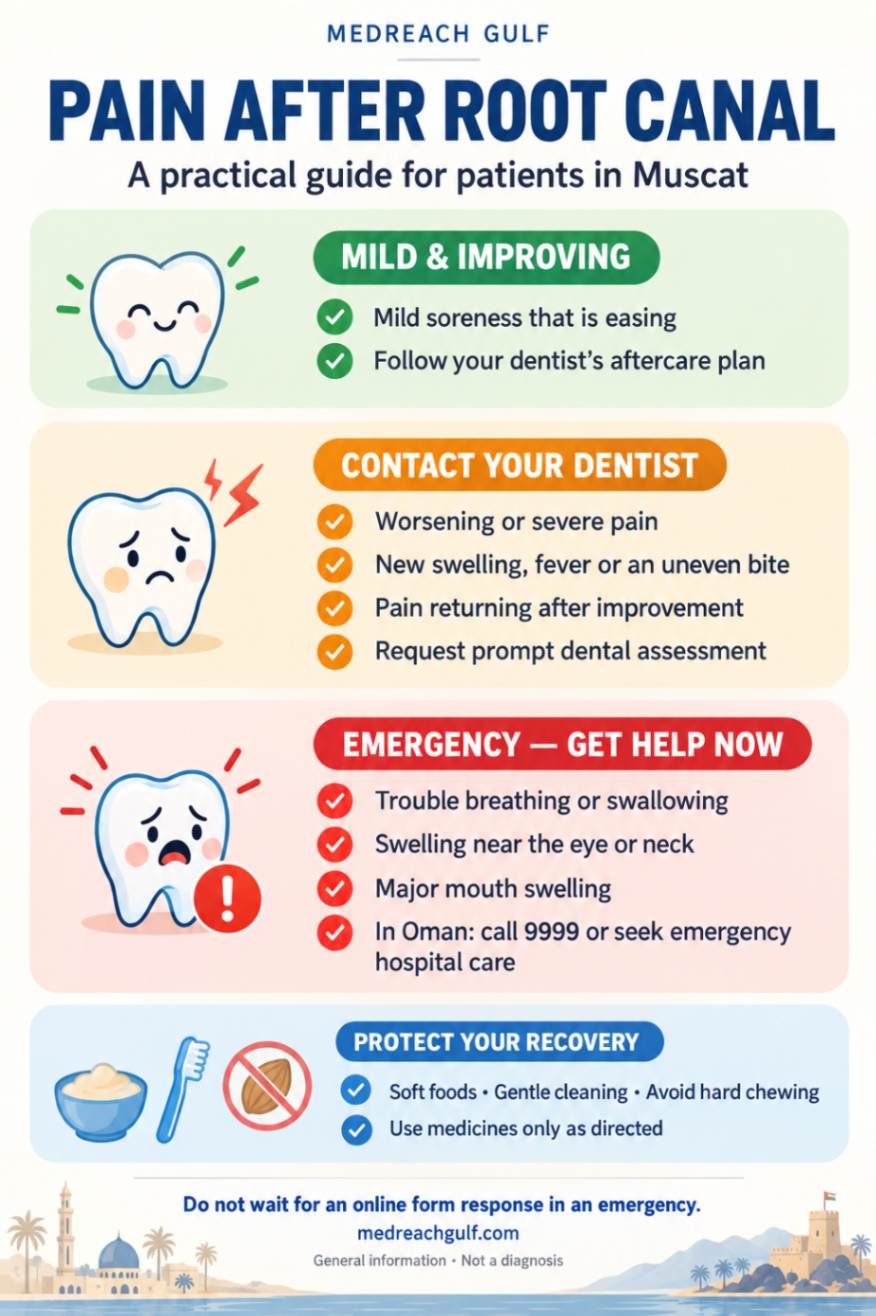
Request help finding dental careIs pain after a root canal normal? Some early soreness can occur. Mild discomfort that is improving is more reassuring than pain that is increasing, returning after improvement or preventing normal sleep. New swelling or an uneven bite deserves a call to your treating dentist.
Get emergency help now for difficulty breathing or swallowing, swelling involving the eye or neck, major mouth swelling or marked difficulty opening your mouth. In Oman, call 9999 for an emergency or seek emergency hospital care. Do not wait for a website form response.
If you need an overview of treatment rather than recovery, see our guide to root canal treatment in Muscat. Here, the focus stays on what to do after your appointment.
Start with three questions about your pain
Before searching for another remedy, write down three things: is the pain improving, is it present without touching the tooth, and do you have swelling or feel unwell? “It hurts” gives a clinic less useful information than a short description of the pattern.
| What you notice | Your next step |
|---|---|
| Mild soreness, improving, no new swelling | Follow your aftercare plan and record changes. |
| Tooth meets first when closing; biting feels uneven | Contact the treating clinic for a bite assessment. |
| Increasing pain, new swelling, fever or feeling unwell | Request urgent dental assessment today. |
| Breathing, swallowing or eye symptoms; major swelling | Seek emergency medical help immediately. |
This is a practical sorting guide, not a diagnostic test. Describe symptoms when calling so the clinical team can decide how quickly you should be seen. If your condition changes while waiting, contact them again rather than relying on the original appointment time.
How long does pain last after a root canal?
There is no universal deadline. The NHS describes soreness improving over a couple of weeks, while Leeds Teaching Hospitals notes that a tooth may be sore for three or four days and sometimes longer. These are recovery descriptions, not permission to ignore worsening symptoms.
The first evening and following few days
Local anaesthetic can leave the mouth numb for several hours. Once it wears off, the treated area may be noticeable. Keep your written instructions nearby and distinguish discomfort around the tooth from soreness in the jaw. Avoid repeatedly biting on the tooth to “test” it.
Root canal pain after one week
Ask whether you can do more comfortably today than several days ago. Are meals easier? Are you waking less often? If pain is not clearly settling, remains substantial or requires repeated medication, arrange a review. You do not need to wait until a calendar threshold before reporting a concern.
Root canal pain after two weeks
Persistent symptoms should be discussed with the dentist even if they are tolerable. The clinician needs to assess the tooth, bite and surrounding tissues. Symptom improvement and healing visible on an X-ray happen on different timescales; the appearance of the root area is assessed over follow-up visits.
Why can a tooth hurt after its nerve is removed?
Root canal therapy treats the pulp inside the tooth. The supporting tissues around the roots remain living and can still register pressure or inflammation. Removing the pulp does not make every structure around the tooth incapable of hurting.
That explains why early tenderness alone does not prove that treatment failed. Equally, the explanation should not be used to dismiss continuing pain. The next step depends on examination findings, not the assumption that every symptom is either “normal healing” or a missed canal.
Pain after a root canal when biting
Tell the dentist if the tooth feels high, touches before the others or hurts mainly when your teeth meet. A filling or crown may need its bite checked. Do not try to file it down yourself. Also describe whether pain occurs on biting down or releasing the bite; cracks can produce variable chewing symptoms.
Throbbing pain after root canal treatment
“Throbbing” is a description, not a reliable diagnosis of infection. Tell the clinic whether it is spontaneous, worsening or accompanied by swelling. Severe pain after a root canal at night deserves prompt contact, particularly when it prevents sleep despite following your agreed pain-relief plan.
Jaw pain or pain that seems to move
Jaw soreness can follow a long appointment. However, pain felt in a tooth can sometimes originate elsewhere, including jaw muscles. Persistent or hard-to-locate pain calls for a careful assessment rather than automatic repeat treatment of the same tooth.
Swelling, a gum boil or pain returning later
Swelling after root canal treatment should be reported, especially when it is new or increasing. A gum boil, drainage or bad taste also warrants assessment. Less pain after drainage does not establish that the underlying problem has resolved.
Tooth pain months after a root canal is different from immediate recovery. Possibilities include a leaking restoration, new decay, a crack or a problem within the canal system. An endodontist may discuss further treatment after establishing the cause; a new symptom does not automatically mean extraction.
For your appointment, separate two dates: when the original treatment happened and when this episode began. Mention whether there was a completely comfortable period in between. That timeline is more informative than simply saying the root canal “still hurts.”
Pain relief after root canal treatment: use a safe plan
Follow your dentist’s instructions first. Paracetamol or ibuprofen may be appropriate for some adults, but your medicines, medical history and pregnancy status affect the choice. A pharmacist can check suitability; a painkiller cannot correct a high restoration or identify the cause of persistent symptoms.
Before taking ibuprofen
Ask a clinician or pharmacist first if you have a history of stomach ulcers, kidney or heart disease, blood-clotting problems, an NSAID allergy, relevant asthma reactions or take blood thinners. Avoid ibuprofen in pregnancy unless a healthcare professional advises it. Do not combine it with another NSAID such as naproxen or diclofenac. Do not stop prescribed low-dose aspirin yourself; ask about a suitable painkiller.
Before taking paracetamol
Check all active ingredients, including cold-and-flu products, so you do not take paracetamol twice under different brand names. Ask about suitability if you have liver disease, regularly drink heavily or weigh under 50 kg. Follow the product instructions and any individual limits from your clinician.
Keep a simple record of the medicine, strength, amount and time taken. Bring the packets or clear photos to your review. If you exceed the recommended amount, seek urgent medical advice rather than waiting for symptoms. Do not keep increasing doses because relief is incomplete.
Do antibiotics help pain after a root canal?
Antibiotics are not routine painkillers. ADA guidance prioritises dental treatment for most localised pulpal and root-related problems; systemic signs such as fever or malaise can change the decision. Do not start leftover tablets or someone else’s prescription. If prescribed an antibiotic, follow the prescriber’s plan and report deterioration.
A useful pharmacy question is: “These are my regular medicines and these are the painkillers I have already taken. Is this product suitable, and what must I avoid combining it with?” Bring the actual list rather than relying on memory.
Eating, cleaning and protecting the treated tooth
For what to eat after root canal treatment, start with soft foods that need little chewing: eggs, yoghurt, mashed vegetables or lukewarm soup. Avoid very hot or cold food if it aggravates discomfort. Wait until numbness has worn off before chewing.
While the tooth is temporarily restored, avoid hard or heavy biting on it. Brush and clean between teeth gently, following any specific instructions you received. Smoking can interfere with healing. Ask your dentist when the tooth is ready for normal chewing.
Pain between root canal appointments
A first visit does not always complete treatment. Check whether the canals have been fully treated and what remains to be done. Keep the next appointment even if symptoms settle; feeling better is not confirmation that the planned care is finished.
A temporary filling fell out—what now?
Contact the clinic, explain whether there is an obvious hole and avoid chewing on that side. Do not use household glue or push objects into the tooth. Ask how quickly the restoration needs replacing; a photograph may help explain what changed but cannot replace examination.
Pain after a root canal and crown
Note whether the pain began before or after crown placement. The dentist may need to check the bite, restoration and tooth. A final crown or other suitable restoration protects the remaining structure; discuss timing rather than indefinitely postponing it because the tooth feels comfortable.
Getting a root canal follow-up in Muscat
Start with the dentist who treated you when possible: that clinic already has your history and treatment records. If treatment happened abroad, the clinic is unavailable or you want another opinion, organise the records before your visit. For non-emergency comparisons, our dental clinic in Muscat guide is a starting point.
What to say when calling
“I had root canal treatment on [date]. The pain is [improving/worsening] and happens [at rest/when biting]. I [do/do not] have swelling or fever. The tooth has a [temporary filling/final filling/crown]. Can your clinical team advise how urgently I should be seen?”
If searching for an urgent dentist for pain after a root canal in Muscat, confirm that the practice can assess post-treatment problems and ask who will examine you. Do not assume that an online listing means an appointment is available tonight.
Choose a practical location for review
- Near Ruwi: use the dental clinic in Ruwi guide, then confirm the address and clinician.
- Near Al Khuwair: explore the dental clinic in Al Khuwair guide and ask about follow-up availability.
- Near Al Seeb: consult the dental clinic in Al Seeb guide and check whether specialist referral is needed.
These area guides do not confirm opening hours, specialist availability or a reserved appointment. For urgent symptoms, clinical access takes priority over finding the closest listing or comparing promotional prices.
Bring these details
- Treatment dates, tooth location and any previous X-rays or reports.
- When symptoms started and what makes them better or worse.
- Your medicine list, allergies and relevant health conditions.
- Details of the temporary or final restoration and the next planned visit.
- Insurance information, if applicable; ask what assessment and imaging cost.
What should a follow-up appointment clarify?
Ask the dentist to explain the likely source of pain and what findings support it. Depending on the situation, assessment may involve examining the restoration and gums, checking biting contacts, testing nearby teeth and taking appropriate images. The aim is to identify the cause before choosing treatment.
Leave with answers to four practical questions: what happens next, what should improve, when should it improve, and whom should you contact if it does not? Ask for written instructions if you are tired, anxious or communicating in a second language.
A practical example: two different calls
Illustrative scenarios, not patient testimonials: one person in Ruwi reports discomfort only when the treated tooth meets first during chewing. Another reports worsening pain with new cheek swelling. The first call highlights a bite concern; the second highlights a need for urgent assessment. Neither person can determine the diagnosis from symptoms alone.
The lesson is to report specific changes. “I need something stronger” is less useful than explaining how the pain has changed and what else is happening.
Questions patients in Muscat often ask
Can I go to work after a root canal?
Discuss this with your dentist based on the procedure, symptoms and work duties. Do not drive or operate machinery if medication or sedation affects alertness. Ask for instructions before leaving, particularly if you plan to work a late shift.
Does every painful root canal need retreatment?
No. A diagnosis comes first. The clinician needs to distinguish problems in the treated tooth from restoration issues or pain originating elsewhere. Retreatment is one possible option, not the automatic response to discomfort.
Can I wait if the pain disappears after medicine?
Tell the dentist if symptoms recur as each dose wears off. Relief alone does not explain the cause. Use your recovery instructions and the overall pattern to guide follow-up, and report new symptoms rather than simply repeating medication.
Should I cancel my next visit if I feel fine?
No—check with the clinic first. The appointment may be for completion of treatment, restoration or monitoring. Ask what stage you have reached and what that visit is intended to accomplish.
Can a dentist in Muscat review treatment done overseas?
Ask the receiving clinic whether it can assess your case. Bring available records and explain which stages were completed. A new clinician may need an examination and appropriate imaging before advising you; an overseas treatment receipt alone is not a clinical record.
What if my clinic is closed tonight?
Check its recorded message or written aftercare instructions for out-of-hours arrangements. Contact another available dental provider for urgent symptoms. For the emergency warning signs listed above, seek hospital care rather than waiting for routine opening hours.
Make your next step specific
Record your symptoms, find your aftercare instructions and contact the treating clinic when something is not progressing as expected. If you need a non-emergency starting point for care in Muscat, use the enquiry form. Tell the clinic about urgent symptoms directly instead of waiting for an online response.
General adult patient information. Your own dentist’s advice should reflect your examination and health history. Sources checked 4 October 2026; no individual diagnosis is provided here.