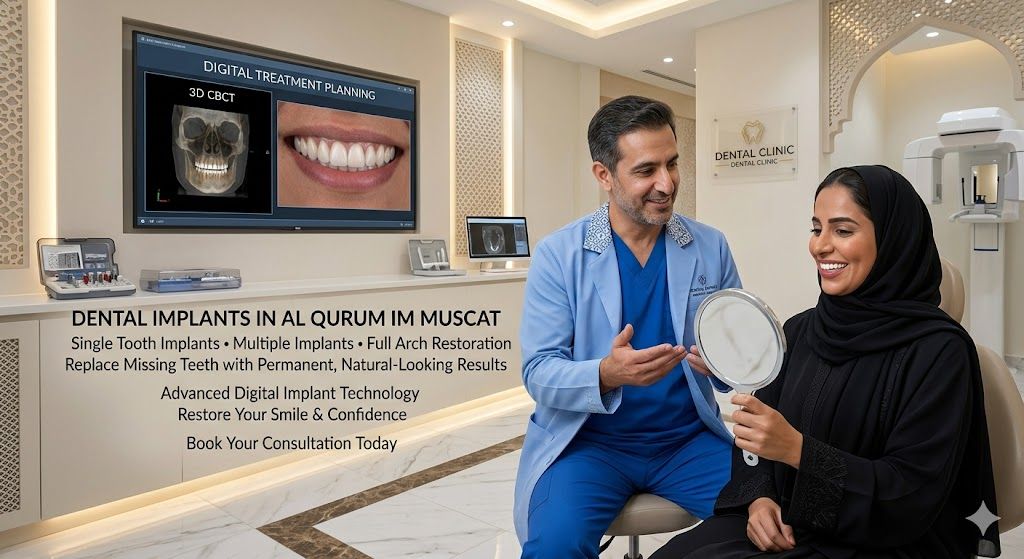
Have you ever, in the middle of a heartfelt laugh, suddenly covered your mouth with your hand so that no one sees the empty space of your missing tooth? Or perhaps for a long time, you have given up eating your favorite foods, like a crisp apple or grilled steak, because chewing has turned into a painful nightmare for you. Losing teeth is not merely an aesthetic problem; this event sets off a domino effect of hidden issues. From the silent bone loss in the jaw that causes changes in facial structure and premature wrinkles around the mouth, to digestive problems resulting from incomplete chewing of food, and a severe drop in self-confidence in professional and social environments.
In the year 2026, with the introduction of artificial intelligence and ultra-advanced 3D scanners into the medical field, there is no longer a need to put up with removable dentures, annoying adhesives, and old partials. Dental implants are now not a luxury item, but a therapeutic necessity and the gold standard for restoring the 100% functionality of the chewing system. However, the success of this treatment depends directly on the expertise of the team you choose. Finding a dental clinic in al qurum that is equipped with Guided Surgery technologies and uses FDA-approved materials is the most vital step you must take.
This article is a comprehensive and unique mega-post compiled to answer all your concerns – especially the confusion regarding costs and the fear of the treatment process. We provide you with all the necessary information with complete transparency so that you can invest in your most important asset, your health, with peace of mind.
Book Your Free Consultation Now
The Anatomy of Dental Costs: Investing in the Quality of Life
When it comes to dental costs, many patients become confused due to varying prices across different clinics. What is the reason for this price difference? Is being cheaper always in your favor? The short answer is: No. The cost of a successful implant treatment depends on highly important variables:
- Manufacturing Country and Fixture (Base) Brand: Swiss implants (like Straumann) and American ones, due to decades of research and development and the high purity of titanium, have a higher price and certainly a longer lifespan compared to startup brands.
- Surgeon's Level of Expertise: A surgeon who has a specialized board in maxillofacial surgery or periodontics has a different fee than a general dentist. This expertise is a guarantee to prevent damage to the jaw nerves (like the inferior alveolar nerve).
- Need for Foundation Surgeries (Bone Grafting & Sinus Lift): If a long time has passed since your tooth was extracted, the bone resorbs. For implant placement, bone powder and a membrane are needed, which carries a separate cost.
- Type of Final Crown: All-ceramic Zirconia crowns, which are milled with CAD/CAM machines, are much more expensive, natural-looking, and durable than old Porcelain-Fused-to-Metal (PFM) crowns.
🧩 Comprehensive and Comparative Table of Approximate Costs and Investment Value
| Type of Treatment / Dental Service | Material and Technology Used | Useful Lifespan | Cost Index (Relative) |
|---|---|---|---|
| Premium Implant (Swiss/American) | Grade 4 Titanium or Roxolid alloy, Monolithic Zirconia crown | Lifetime (with oral hygiene) | $$$ |
| Standard Implant (Korean/European) | Standard Titanium, E-max or PFM crowns | 15 to 20 years | $$ |
| Composite Veneer (Smile Design) | Nano-ceramic resins (No tooth shaving required) | 5 to 7 years | $ |
| Ceramic Laminate (Porcelain Veneer) | Lithium disilicate glass, resistant to staining | 10 to 15 years | $$ |
| Full Jaw Reconstruction (All-on-4) | 4 implant bases with a full fixed prosthesis for the entire jaw | Lifetime | $$$$ |
The Architecture of a Smile: Detailed Stages of Digital Implant Treatment
Many people evade getting implants due to the fear of traditional surgeries, pulling stitches, and prolonged pain. But in today's advanced clinics, the concept of "Digital Implantology" has changed the rules of the game.
- 3D Discovery (CBCT Scan): The first step is preparing a 3D radiographic image. This scan allows the surgeon to examine your bone in 360 degrees. Bone density, its thickness, and the distance to the sinuses and lower jaw nerves are measured with micron precision.
- Virtual Planning and Surgical Guide Fabrication: The scan data is entered into specialized software. In a virtual environment, the surgeon determines the best angle and size of the implant. Then, a Surgical Guide is created using a 3D printer.
- Flapless Surgery: With the help of the template, the implant is placed exactly through the gums (without the need for an extensive incision or reflecting the gums). 🌍 As confirmed by Mayo Clinic, using pure titanium at this stage ensures the body's immune system doesn't reject it, and the osseointegration process (fusing with the bone) is carried out with a 98% success rate.
- The Golden Healing Period: Depending on your immune system and body metabolism, it takes between 3 to 6 months for the bone to weave around the microscopic grooves of the implant, turning it into a solid rock in your jaw.
- Digital Impression and Crown Installation: Finally, using intraoral scanners (without the need for old, nausea-inducing putties), a 3D snapshot of the implant's position is taken, and the final crown—which perfectly matches the light reflection and color of your natural teeth—is screwed or cemented onto it.
Watch How the Process Works
Request a Callback
Aesthetics in Dentistry: The Miracle of Veneers
Sometimes the problem isn't just a missing tooth. The yellow color of teeth, interdental spaces (diastema), chipped tooth edges, or minor misalignments can reduce the attractiveness of the face. Alongside implants, the art of cosmetic dentistry comes into play. If you are looking to correct the shape of your smile and want to create a flawless harmony between implants and your natural teeth, visiting a cosmetic dentist in al qurum is the fastest route to achieving a Hollywood smile.
Understanding the Differences: Ceramic Laminate vs. Composite Veneer
- Composite Veneers: They are made of resin polymers. Their biggest advantage is that they are molded directly onto the tooth in a single session (about 4 to 5 hours for both jaws) and usually do not require any shaving of the tooth enamel. Economically, they are very cost-effective, but they require more care because heavy consumption of tea, coffee, and tobacco can cause them to yellow over time.
- Ceramic Laminates (Porcelain Veneers): These are ultra-thin, translucent shells baked in a laboratory. To install them, the dentist must shave off about 0.3 to 0.5 millimeters of the tooth enamel. However, in return, they offer unparalleled resistance to discoloration, are much more radiant, and their texture looks exactly like natural tooth enamel.
Prevention and Treatment for the Next Generation: Pediatric Dentistry
The root of many jaw and dental problems in adults dates back to a lack of care during childhood. Premature extraction of primary teeth can cause a loss of the necessary space for the eruption of permanent teeth, which in the future imposes heavy orthodontic costs on the family. Moreover, the formation of "dental phobia" usually occurs at a young age due to unprincipled encounters.
A comprehensive and family-oriented clinic must provide a safe and stress-free environment for children. By scheduling periodic visits with a pediatric dentist in al qurum, you can ensure the oral and dental health of your children. Pediatric specialists, using behavioral methods (like Tell-Show-Do), periodic fluoride therapy to strengthen tooth enamel, and fissure sealants (coating the deep grooves of molars to prevent microbial accumulation), guarantee the future health of your child.
🎬 A Tale of Transformation: From Isolation to Returning to Social Life
Ms. "Sara. M," a 42-year-old teacher, had used an old dental bridge for years to replace two missing teeth in her upper jaw. Over time, the gum under the bridge receded, causing bad breath and an unsightly metallic appearance at the gum line. This issue made her constantly cover her mouth with her hand while teaching in class and avoid taking photos at parties.
After visiting the clinic and a detailed examination, the old and damaging bridge was removed. Two digital implant bases were planted for her without the slightest incision, and in the same session, high-quality temporary crowns were placed on them. After 4 months, the final zirconia crowns designed with CAD/CAM technology were installed. Sara today attends her classes with full self-confidence and a radiant smile, enjoying biting into an apple without any fear. She says: "I wish I had put aside the fear of surgery years ago."
Why is the Capital of Oman a Global Destination for Tooth Implantation?
In recent years, Muscat has become one of the pioneering hubs in the field of medical tourism (health tourism) in the Middle East. The highly strict regulatory laws of the Omani Ministry of Health over clinic equipment, the direct import of original materials from Europe and America, and the presence of specialists with international degrees have caused the medical standards in this city to rival top clinics in London or Berlin.
For those looking to receive risk-free services, with a valid warranty and in a completely sterile and relaxing environment, choosing dental implant muscat services is a smart decision that guarantees high-quality treatment alongside competitive costs (compared to Europe).
✅ Golden Checklist: Execution Tips to Increase Implant Lifespan
The successful placement of a fixture by the surgeon is not the end of the job; rather, it is the beginning of a path that requires your participation and commitment. By following these simple yet vital execution tips, make the lifespan of your new teeth lifelong:
- Revolution in Oral Hygiene: Implants do not decay, but the gums around them can become inflamed and infected (peri-implantitis). Brushing twice a day with a soft brush and non-abrasive toothpaste is mandatory.
- Investing in a Water Flosser (Waterjet): Using dental floss for implant crowns is sometimes difficult. Oral irrigation devices using water pressure extract all microbial plaques and food remnants from under the crowns and interdental spaces.
- Absolute Prohibition of Tobacco During Recovery: Nicotine constricts the blood vessels in the gums and disrupts oxygen supply to the healing tissue. Smokers are 5 times more likely to face implant rejection than normal individuals. Quit smoking and hookah for at least one month before and two months after the surgery.
- Managing Jaw Pressure (Bruxism): If you grind your teeth at night, make sure to ask your dentist to make you a "Night Guard" so that the heavy pressure of the jaw does not break the ceramic crown or loosen the implant base.
- 6-Month Visits: Visit the clinic twice a year for specialized scaling with specific implant scalers and to check the bone status with radiography.
📚 Frequently Asked Questions (FAQ): Everything You Need to Know
We understand that the tooth implantation process raises many questions in your mind. In this section, we have answered 10 frequently asked questions from patients in a clear and precise language.
1. Is a dental implant really a permanent solution?
Yes, to speak quite directly, if hygiene is maintained, the titanium base of the implant will remain in your jaw forever, and only the crown on top of it might need replacement after 10 to 15 years.
2. Does the implant surgery process involve a lot of pain and swelling?
Believe it or not, the pain is much less than extracting a tooth! We perform the surgery under full local anesthesia. By using modern methods like guided surgery (without an extensive gum incision), post-operative swelling and pain are reduced to an absolute minimum and are usually fully controlled by taking Ibuprofen or Acetaminophen on the first day.
3. Exactly how much does each implant unit cost?
The final price is not a fixed package. The cost depends on three main factors: the brand of the implant base (for example, Swiss brands are more expensive than Korean ones), the type of crown (Zirconia or PFM), and whether your jawbone requires augmentation and bone powder or not. To provide an accurate proforma invoice, conducting a 3D scan and an in-person visit is absolutely mandatory.
4. How long does it take for the treatment to be completed?
The surgical procedure of placing the base itself usually takes less than an hour. However, your body needs time for bone formation around the implant base. This period typically takes 3 months in the lower jaw and between 4 to 5 months in the upper jaw due to lower bone density. During this time, the clinic provides you with a temporary crown so you are not left without a tooth.
5. Can the elderly and seniors also get implants?
There is no upper age limit for implants! We have 80-year-old patients who have successfully received implants. The determining factor is not age, but the general health of the individual and the amount of jawbone density, which is evaluated through blood tests and scans.
6. I have diabetes, can I get a tooth planted?
Yes, diabetes alone is not an obstacle to implants. If your blood sugar is under control (the HbA1c criterion is below 7 or 7.5), your chances of a successful implant are no different from non-diabetic individuals. The doctor will work with you before the surgery to ensure conditions are completely stable.
7. Is a traditional bridge better, or an implant?
Definitely an implant! The biggest drawback of a bridge is that the doctor has to shave down two perfectly healthy adjacent teeth to mount the bridge on them. Furthermore, a bridge cannot stop jawbone loss. An implant is a completely independent solution that reconstructs the tooth from root to crown and causes no damage to adjacent teeth.
8. What is a Bone Graft, and do I need it?
When a tooth is extracted, the jawbone loses its thickness and height over time (resorbs). For the implant base to stand firm like a sturdy pillar in the ground, there must be sufficient bone diameter. If the bone has thinned out, the surgeon will reconstruct the bone bed using grafting materials before or simultaneously with planting the implant.
9. What is the All-on-4 method and who is it suitable for?
This method is a miracle for people who have lost all the teeth in one jaw. Instead of planting 14 implants for 14 teeth (which incurs heavy costs and surgery), the entire dental prosthesis of the jaw is screwed and fixed onto only 4 implant bases planted at engineered angles. This method is much faster and more economical.
10. Can an implant be placed immediately after tooth extraction?
Yes, this method is called "Immediate Placement". If the extracted tooth lacks acute infection and cysts, and the surrounding bone walls are healthy, the surgeon can place the implant base in the empty space during the very same extraction session to prevent bone loss and bring the treatment time forward by months.
Your smile is your personal business card, and your physical and mental health are deeply tied to having healthy teeth. There is no longer a need to avoid a prominent presence in society and enjoying the real taste of foods due to missing teeth. By utilizing the world's latest technologies and a team of experienced specialists, we are here to solve the most complex dental problems for you with the lowest amount of stress.
The time has come to elevate your quality of life. Allow our specialists, after detailed clinical examinations, to propose the best and most economical path to restore the beauty and functionality of your smile.
Ready to Transform Your Smile?
Fill out the form below to book your appointment.
