
Master Your Dental Implant Recovery in Muscat
A comprehensive, step-by-step masterclass tailored specifically for residents of Muscat. Ensure a smooth, painless, and successful healing process after your implant surgery with our ultimate 2500+ word guide.
Start Reading the GuideWelcome to Your Implant Healing Journey
Imagine walking along the stunning Muttrah Corniche at sunset, feeling the gentle sea breeze. The last thing you want is to be distracted by a throbbing ache in your jaw, or the anxiety of wondering if your recent dental surgery is healing correctly. Getting a dental implant muscat is a monumental step towards restoring not just your bite, but your confidence, your speech, and your overall quality of life. However, the success of this life-changing procedure doesn't simply end the moment you step out of the dentist's chair. In fact, the most crucial phase is just beginning: your personal recovery journey.
For patients residing right here in Muscat, managing the healing process effectively requires a localized approach. The warm climate of Oman, our unique culinary traditions, and the local lifestyle all play significant roles in how your body responds to the surgery. You might be flooded with questions: "How much swelling is normal in this heat?" "When can I safely enjoy a hot cup of Karak tea again without risking my implant?" or "How do I navigate social gatherings and traditional Omani feasts while on a soft diet?" If you are feeling anxious about the days following your surgery, rest assured, you are entirely normal and you are not alone.
This extensively detailed guide has been meticulously crafted specifically to offer actionable, culturally relevant Implant Recovery Tips: A Guide for Muscat Patients. We will walk you through exactly what to expect, hour by hour and day by day, from the moment the local anesthesia wears off to the final, triumphant stages of osseointegration. By following this guide, you will ensure your new smile is built on a solid, healthy, and permanent foundation.
Essential tips for a smooth and painless dental implant recovery in Muscat.
The Core Objective of Recovery
The primary goal of your recovery is twofold: First, to manage the immediate post-operative symptoms like swelling and discomfort. Second, and most importantly, to create the perfect biological environment for osseointegration—the vital process where your jawbone actually grows around and fuses with the titanium implant post. Every tip in this guide is aimed at protecting this delicate fusion process.
Your Complete Dental Implant Recovery Roadmap
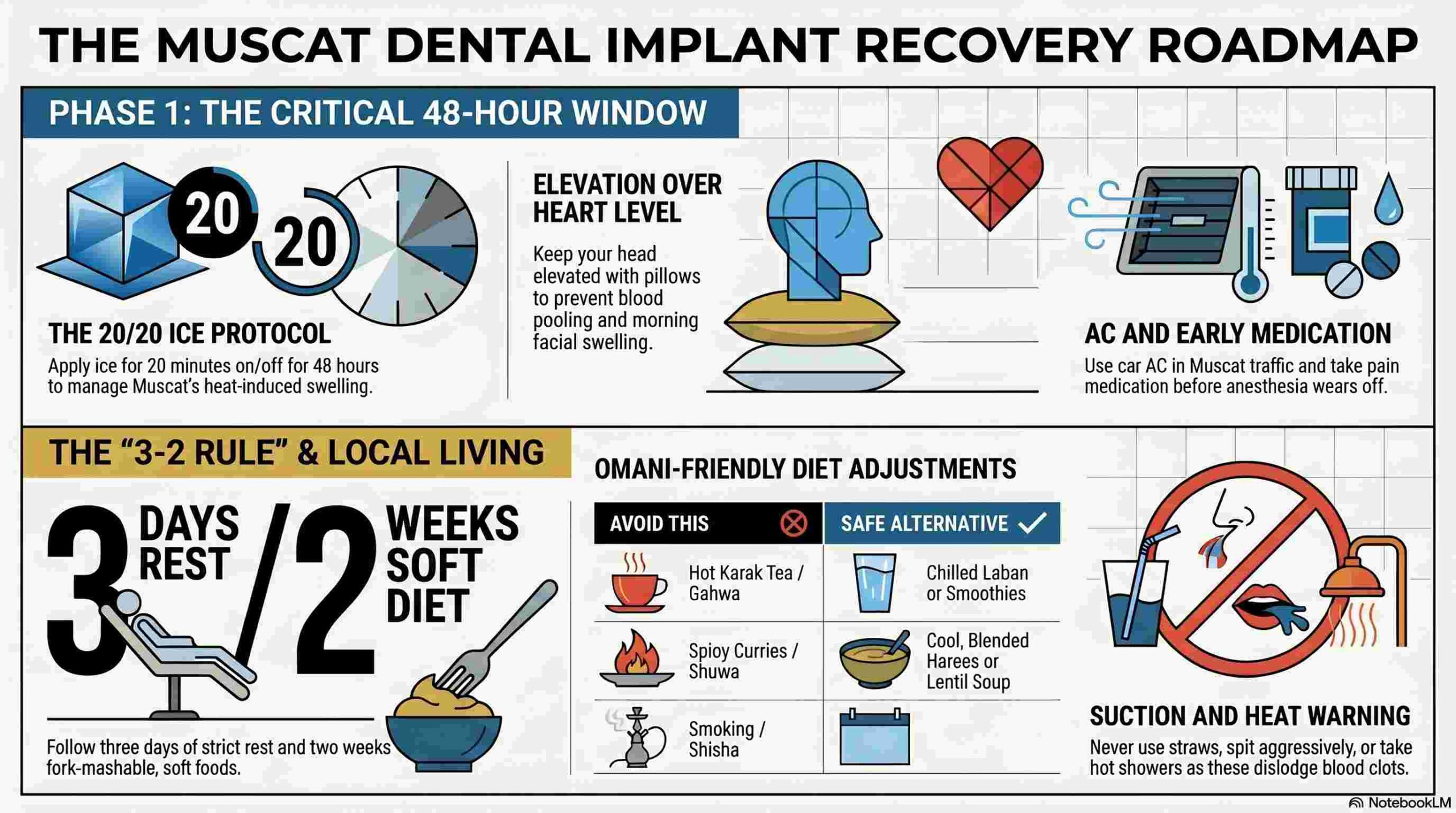
A visual guide to your healing journey and timeline in Muscat.
Phase 1: Navigating the Critical First 48 Hours in Muscat
The initial forty-eight hours post-surgery are undeniably the most critical. Your body has just undergone a surgical intervention, and its natural, immediate reaction is inflammation. Managing this inflammatory response effectively, especially in Muscat's generally warm climate, is your primary job. Let's break this down into actionable steps.
The First 12 Hours: Immediate Action
As you leave your dental clinic in Muscat, you will likely still be numb. This is the window to prepare.
-
Gauze Management: Your dentist will have placed a gauze pad over the surgical site. Bite down on this with firm, consistent pressure for 45 to 60 minutes. This pressure acts like a tourniquet, helping to form the crucial initial blood clot. If oozing continues, replace it with a fresh, sterile gauze.
-
Stay Ahead of the Pain: Do not wait to feel pain. Before the local anesthesia wears off completely, take the first dose of your prescribed pain medication. Whether it's Ibuprofen or a specific prescription from your Muscat specialist, taking it early prevents the pain signals from taking hold.
-
The Journey Home: If you are driving in Muscat traffic, keep the car's air conditioning on a cool setting. Heat increases blood flow, which can exacerbate bleeding and swelling. Ideally, have someone else drive you home so you can relax immediately.
Hours 12 to 48: The Battle Against Swelling
Swelling is a completely natural and expected inflammatory response, indicating that your body is sending healing cells to the area. However, excessive swelling is uncomfortable. Here is how to minimize it:
The 20/20 Ice Protocol
Wrap an ice pack (or a bag of frozen peas) in a thin, clean towel. Apply it to the side of your face over the surgical area for 20 minutes on, then 20 minutes off. Continue this rigorously while awake for the first 2 days. The cold constricts blood vessels, drastically reducing the fluid build-up in your tissues.
The Elevation Strategy
Gravity is your ally against swelling. When resting, sitting, or sleeping, keep your head elevated above the level of your heart. Use two or three thick pillows in bed. This simple physical adjustment prevents blood from pooling in your head and face, making a massive difference in morning swelling.
What to Expect on Day 3
It is a very common misconception that you should feel perfectly normal by day three. In reality, medically speaking, day 3 is often when swelling and localized inflammatory discomfort reach their absolute peak. Do not panic if your face looks more swollen on Tuesday than it did on Sunday after a Saturday surgery. This is the zenith of the healing response. After day 3, the swelling will begin a steady decline. Switch from cold compresses to warm, moist heat (like a warm, damp washcloth) on the outside of your face to help dissipate the residual swelling.

Proper rest and head elevation in a cool environment are critical during the first 48 hours of recovery in Muscat.
The Ultimate Muscat Implant Recovery Diet
What you consume in the days and weeks following your surgery directly and profoundly impacts your healing. Your body needs robust nutrition—vitamins, minerals, and protein—to rebuild bone and gum tissue. However, the physical act of eating must not disturb the delicate implant site or the blood clot protecting it. A strict soft diet is absolutely mandatory. Let's look at how to adapt this diet to the local culinary context of Oman.
Days 1 to 3: The Liquid and Puree Phase
During the peak swelling phase, you want to avoid chewing entirely. Everything should be easily swallowable and, crucially, cool or room temperature. Heat can dissolve the blood clot and trigger bleeding.
Recommended Omani-Friendly Soft Foods
- Chilled Laban: A staple in Oman, rich in calcium and protein.
- Cold Blended Soups: Think pureed lentil soup (Shorbat Adas) served cool.
- Plain Yogurt: Smooth, soothing, and packed with probiotics.
- Mashed Sweet Potatoes: High in Vitamin A, excellent for tissue repair.
- Smoothies: Banana, mango, and milk (Strictly NO seeds like strawberries).
- Applesauce: Easy to swallow and gentle on the stomach.
Days 4 to 14: The "Fork-Mashable" Phase
As swelling subsides, you can introduce foods that require minimal chewing. The rule of thumb: If you can easily mash it with a fork, you can eat it. Avoid chewing on the side of the implant.
- Harees: The traditional Omani wheat and meat dish is excellent, provided it is cooled down completely and blended very smooth.
- Soft Flaky Fish: Steamed white fish is a great protein source that requires barely any chewing.
- Scrambled Eggs: Softly cooked, providing high-quality protein for cellular repair.
- Overcooked Pasta or Macaroni: Ensure it's very soft, not al dente.
The Absolute "Do Not Eat" List
Consuming the wrong items can cause catastrophic failure of the implant integration or result in painful complications like a dry socket.
Temperature & Texture
- Hot Beverages: No hot Karak tea, Arabic coffee (Gahwa), or boiling soups for at least 48 hours.
- Crunchy Items: Nuts, chips, crusty bread, popcorn, or hard Omani Halwa edges.
- Chewy Foods: Steak, tough meats (avoid Shuwa for a few weeks), gummies, chewing gum.
Chemical Irritants
- Spicy Foods: Curries, hot sauces, or heavily spiced local dishes will severely irritate the raw surgical wound.
- Acidic Items: Tomatoes, citrus fruits (oranges, lemons) will sting and inflame the healing gums.
- Using a Straw: Never use a straw! The suction force easily rips the blood clot out of the socket.
Hydration in Muscat's Climate
Dehydration slows down cellular repair. In Muscat, especially during the warmer months, you lose fluids quickly. Drink at least 8 to 10 glasses of water a day. Ensure the water is cool or room temperature. Remember the golden rule: drink directly from the glass, never use a straw.
Oral Hygiene: The Shield Against Infection
The oral cavity is naturally full of bacteria. While your body is robust, an open surgical wound containing a foreign titanium object is highly susceptible to bacterial infection. Infection (peri-implantitis) is the number one cause of early implant failure. Maintaining impeccable, yet gentle, oral hygiene is your strongest shield.
Day 1 (Surgery Day): The "Hands-Off" Approach
Do absolutely nothing to the surgical site. Do not brush, do not floss near it, do not use mouthwash, and most importantly, do not spit. Spitting creates a negative pressure vacuum in your mouth that can dislodge the newly forming blood clot. Let your mouth rest completely.
Day 2 & 3: The Magic of Salt Water
Begin warm salt water rinses. Mix half a teaspoon of regular table salt into a glass of warm (not hot) water. Take a sip, tilt your head gently from side to side to let the liquid wash over the implant area, and then—crucially—lean over the sink and let the water passively fall out of your mouth. Do not swish aggressively. Do not spit. Repeat this 3 to 4 times a day, especially after eating anything.
You may begin brushing your other teeth using a manual, ultra-soft bristled toothbrush. Avoid the surgical quadrant entirely. Do not use electric toothbrushes yet, as the vibration can be disruptive.
Day 4 and Beyond: Gradual Return to Routine
Continue the salt water rinses. You can slowly begin to lightly brush the chewing surfaces of the teeth near the implant, but still avoid the gum line where the sutures (stitches) are located. If your Muscat dentist prescribed an antimicrobial mouthwash (like Chlorhexidine), use it exactly as directed, usually dabbing it onto the area with a cotton swab rather than swishing.
The Nicotine Warning
Whether it's cigarettes, vaping, or traditional Shisha at a Muscat cafe, nicotine is the absolute worst enemy of dental implants. Nicotine is a severe vasoconstrictor; it shrinks blood vessels, immediately cutting off the vital blood supply, oxygen, and nutrients that your gums and jawbone desperately need to heal.
Smoking dramatically increases the risk of implant failure, infection, and severe pain. You must cease all smoking/vaping for at least a week before surgery and for a minimum of two months afterward to allow osseointegration to occur.
Lifestyle and Routine in Muscat Post-Surgery
Integrating your recovery into your daily life in Oman requires a few temporary adjustments.
- Returning to Work: If you work in an office environment in areas like Ruwi or Al Khuwair, you can usually return within 24 to 48 hours. If your job involves physical labor outdoors in the Muscat heat, you should take 3 to 4 days off. The heat and physical exertion elevate blood pressure, risking a hemorrhage at the implant site.
- Exercise and Gym: Avoid all strenuous exercise, heavy lifting, or intense cardio for at least a week. A leisurely evening walk along the beach is fine after day 3, but avoid sweating heavily or activities that make your heart pound.
- Prayer (Salah): During the first 48 hours, the movements of bowing (Ruku) and prostrating (Sujud) will lower your head below your heart, rushing blood to the face and causing throbbing pain or bleeding. It is medically advisable to pray while seated during the peak swelling phase to keep your head elevated.
Special Considerations for Same-Day Dental Implants
Dental technology has advanced rapidly, and many top-tier clinics in Oman now offer immediate loading options. If you have received Same-Day Dental Implants, your recovery protocol has a few distinct and crucial differences. While the immediate cosmetic result is fantastic and you leave the clinic with a complete smile, the underlying titanium post still requires the standard 3 to 6 months to fully fuse with your jawbone (the osseointegration process).
The most critical rule for same-day implants is maintaining a strictly soft diet for a much longer continuous period (often 6 to 8 weeks). Because the new implant is bearing a temporary crown while the bone is still healing, biting into hard foods prematurely can cause "micromovements." Even a movement of a fraction of a millimeter can disrupt the bone fusion, leading to immediate implant failure. Always chew on the opposite side of your mouth and follow your specialist's personalized timeline religiously.
Watch: Expert Implant Recovery Tips
Watch this visual guide to ensure you are following the best practices for a quick and safe recovery.
Frequently Asked Questions
Clear, direct answers to the most common concerns regarding dental implant recovery.
What is the 3-2 rule for implants?
- 3 Days of strict rest: This is the crucial window where you manage the peak swelling with ice, elevation, and avoid any physical exertion.
- 2 Weeks of a soft diet: This is the minimum time required for the superficial gum tissue to heal over the surgical site, during which you must avoid crunchy, hard, or chewy foods that could tear the stitches or disturb the implant.
What are the absolute Do's and Don'ts after a tooth implant?
- Take prescribed meds on schedule.
- Use ice packs diligently for 48 hours.
- Sleep with your head elevated.
- Eat a nutritious, soft diet.
- Use warm salt water rinses (after 24h).
- Smoke or use any tobacco products.
- Use a drinking straw (ever).
- Spit aggressively or swish violently.
- Eat hot, spicy, or crunchy foods.
- Poke the surgical site with your tongue or fingers.
What should I NOT do after getting an implant?
Beyond the obvious (like eating hard candy), the most critical thing NOT to do is create suction in your mouth. This means no straws, no smoking, and no forceful spitting. Suction dislodges the blood clot, exposing the bone and nerves, leading to a severely painful condition known as "dry socket" and exposing the implant site to severe infection risks. Also, avoid heavy lifting or bending over frequently, as this rushes blood to the head.
What helps dental implants heal faster?
Healing cannot be magically accelerated beyond your body's natural biological rate, but you can create the optimal environment for it. The fastest healing occurs when you: 1) Strictly rest in the first 48 hours to minimize inflammation. 2) Maintain an exceptionally clean oral environment using gentle salt water rinses. 3) Consume a diet rich in vitamins (especially Vitamin C) and protein, which are the building blocks of tissue repair. 4) Completely abstain from alcohol and nicotine, as both drastically impede cellular regeneration.
What I wish I knew before dental implants?
Many patients wish they fully understood that placing the implant is only step one. The long-term success relies entirely on 'osseointegration'—the months-long process where your jawbone fuses to the titanium. They also wish they knew how crucial bone density is, and how important it is to choose a highly qualified specialist. To ensure you are fully prepared and avoid costly, painful errors, we strongly advise reading our comprehensive guide on Common Mistakes to Avoid Before Getting Implants in Muscat.
Why is there a recommendation to avoid dairy after dental implants?
While soft dairy like plain yogurt is generally safe and even beneficial, some specialists advise against heavy milk consumption in the immediate days following surgery for two reasons. First, dairy can leave a film or coating over the surgical wound that can trap bacteria and be difficult to clean away gently. Second, if you have been prescribed certain antibiotics (like Tetracycline), dairy products can bind to the medication in your stomach, severely reducing its absorption and effectiveness in fighting infection. Always follow your specific dentist's dietary instructions.
Can I shower after my implant?
Yes, maintaining personal hygiene is fine, but you must alter your showering habits for the first 48 to 72 hours. Avoid taking long, steamy, or very hot showers. The heat and steam will elevate your core body temperature and blood pressure, which dilates blood vessels and can easily restart bleeding at the implant site or increase throbbing pain. Stick to lukewarm, quick showers during the initial recovery phase.
Why is day 3 the worst after tooth extraction or implant surgery?
It's a matter of biology. When tissue is cut and bone is drilled, the body initiates a massive inflammatory cascade to send white blood cells and healing factors to the trauma site. This fluid accumulation (swelling) doesn't happen instantly; it builds up gradually, typically peaking right around the 48 to 72-hour mark (Day 3). Because the swelling is at its maximum, it creates the most pressure on surrounding nerves, resulting in peak discomfort. After Day 3, the body begins to reabsorb the fluid, and symptoms rapidly improve.
Does salt water really help heal dental implants?
Absolutely. It is one of the most effective, safest, and cheapest healing aids available. Warm saline (salt water) is an isotonic solution. It gently draws out excess fluid from swollen gum tissues (reducing swelling), alters the pH of your mouth to make it inhospitable to harmful bacteria, and provides a soothing effect on raw tissue. Remember to start this only 24 hours after surgery to avoid washing away the initial blood clot.
What can I eat 1 week after a dental implant?
By the one-week mark, if your healing is progressing normally, you can transition from liquid/purees to a broader "soft chew" diet. You can enjoy soft-boiled eggs, well-cooked pasta, soft baked fish, finely shredded chicken, steamed soft vegetables (like carrots or zucchini), and soft breads (without crusts). You must still strictly avoid hard nuts, seeds, popcorn, sticky candies, and tough meats, as the underlying bone is still in the very early, fragile stages of healing around the implant threads.
