
Do Braces Hurt? The Honest Truth & 5 Relief Tips
If you are a parent sitting in your living room in Muscat, looking at your child’s crooked teeth, and wondering if the journey to a perfect smile is paved with tears, you are not alone. The single most common question echoing through dental clinics worldwide is universally simple, yet deeply rooted in natural anxiety: Do braces hurt?
Whether you are an adult professional finally deciding to invest in your smile, or a parent preparing your teenager for their impending orthodontic journey, the fear of oral pain is completely understandable. The mouth is one of the most sensitive areas of the human body, packed with nerve endings. No one wants to see their child in discomfort, and certainly, no one wants to volunteer for a miserable, agonizing experience. But let us cut through the playground myths, the exaggerated horror stories from decades past, and the internet rumors. The honest truth is that while realigning teeth inherently involves some level of physical adjustment, it is rarely the excruciating ordeal people imagine. It is a highly manageable, temporary sensation of deep pressure that ultimately leads to a lifetime of confidence, better oral hygiene, and improved facial symmetry.
Finding the right specialist who understands modern pain management protocols and pediatric psychology makes all the difference in the world. For families residing in Oman, consulting a compassionate Pediatric Orthodontist Muscat is the crucial first step to ensure your child’s treatment is as painless, efficient, and welcoming as possible. A skilled specialist knows exactly how to apply the precise amount of force at the right time, minimizing discomfort while maximizing the speed and quality of results.
In this massive, comprehensive guide, we are pulling back the curtain entirely on the science of dental shifting. We will explore the biology of why teeth move, document exactly how much do braces hurt the first day, deeply compare the comfort levels of modern orthodontic solutions (especially the debate between clear aligners and metal brackets), map out a highly detailed timeline of what to expect week by week, and equip you with actionable, scientifically-proven strategies to stop braces pain fast at home.
The Science of Realigning Teeth: The Biology of “Pain”
To truly conquer the fear of braces, we must first deeply understand what is happening beneath the gum line. Often, fear stems from the unknown. When you understand the mechanics, the “pain” transforms in your mind from an injury into a sign of biological progress.
Teeth are not rigidly fixed into your jawbone like concrete pillars or nails driven into a piece of wood. If they were, orthodontics would be impossible. Instead, your teeth are suspended in a dynamic, living hammock of tissues, fibers, and blood vessels called the periodontal ligament. This ligament acts as a shock absorber when you chew.
When an orthodontist applies brackets to the teeth and threads a memory-wire through them, they are intentionally creating a state of controlled imbalance. The wire exerts a gentle, continuous, and highly calculated pressure. This pressure compresses the periodontal ligament on one side of the tooth’s root and stretches it on the opposite side.
This mechanical stress triggers a fascinating, natural biological response known as bone remodeling. The pressure restricts blood flow slightly on the compressed side, signaling your immune system to send in specialized cells:
- Osteoclasts: These are the “demolition” cells. They rush to the side of the root where the pressure is highest and begin to safely break down and dissolve the surrounding bone tissue. This creates an empty microscopic space, allowing the tooth to drift into its new position.
- Osteoblasts: Simultaneously, on the opposite side where the ligament is being stretched, “construction” cells arrive. They begin laying down brand new bone tissue to fill the gap left behind by the moving tooth, anchoring it securely in its new, corrected alignment.
This intricate dance of breaking down and rebuilding bone involves localized inflammation. When patients ask, “Why do my braces hurt all of a sudden?”, they are actually feeling this mild, natural inflammatory cascade. It is vital to understand that this is not “pain” in the traditional sense of an injury, a cut, or a cavity. It is the sensation of profound tooth sensitivity, a dull ache, and a heavy pressure. Your child’s body is literally reshaping their facial structure and jawbone, millimeter by millimeter. Understanding this biological miracle transforms the narrative. You are no longer saying, “my child is in pain”; you are realizing, “my child’s body is actively working to create a healthier, perfectly aligned bite.”
The Psychological Aspect: Managing Dental Anxiety
Before we even look at the physical timelines, we must address the psychological component of orthodontic pain. The brain’s perception of pain is highly influenced by anxiety and expectation. If a child walks into a clinic in Muscat terrified, expecting medieval torture, their nervous system is on high alert. In this state, even the lightest touch can be registered by the brain as sharp pain.
As parents, your reaction and vocabulary shape your child’s experience. Avoid using words like “pain,” “hurt,” or “shot.” Instead, use empowering and normalizing language. Speak about “pressure,” “tightness,” “soreness,” and “the teeth waking up.” Validating their feelings while maintaining a calm, confident demeanor helps lower their cortisol levels, which physically reduces their perception of discomfort. Partnering with a clinic that prioritizes a welcoming, non-threatening environment is essential for managing this psychological baseline.
A Real-Life Scenario: Tariq’s First Week Journey
To bridge the gap between clinical science and everyday life, let’s look at a practical, deeply detailed example. Meet Tariq, a 12-year-old boy living in Muscat. Like most kids his age, he loves football, hanging out with friends, and eating crunchy snacks. He was incredibly anxious about his upcoming “braces day.”
The Clinic Visit:
On the day of his fitting, Tariq was tense. However, the orthodontist explained every tool before using it. The doctor cleaned his teeth with a slightly sour-tasting polish, painted on a special blue glue, and meticulously placed each tiny metal bracket. Tariq felt absolutely nothing during the procedure—no drilling, no needles, just the slight fatigue of holding his mouth open for 45 minutes. “Does getting braces put on hurt?” he asked the assistant halfway through. The answer was a definitive no. The actual application is entirely painless.
The First Evening:
About four hours after leaving the clinic, the initial adrenaline wore off, and the archwire began doing its job. As Tariq sat down for dinner, he noticed a widespread, dull throbbing ache across his upper and lower jaws. His teeth felt incredibly tender, almost as if he had been clenching his jaw aggressively for a week. When he mindlessly tried to bite into a piece of crusty bread, a sharp spike of sensitivity shot through his front teeth. He immediately stopped. His mother, well-prepared, switched his meal to a warm, comforting bowl of blended soup. She gave him a dose of pediatric Ibuprofen and helped him apply a small ball of oral wax to a sharp bracket on his lower canine that had begun rubbing against his inner lip.
Days 2 and 3 (The Peak):
These were the toughest days. Tariq woke up feeling like his teeth were “heavy.” Chewing anything solid was out of the question. His diet consisted entirely of yogurt, smoothies, and mashed potatoes. He felt a bit grumpy and distracted at school due to the persistent background ache. The inside of his cheeks felt raw where the metal rubbed against the soft tissue.
Day 4 to 7 (The Turning Point):
By the morning of the fourth day, Tariq woke up and realized the throbbing had significantly subsided. The teeth had moved just a microscopic fraction, but it was enough to relieve the intense initial tension. His inner cheeks had started to adapt and toughen up. By day seven, Tariq was back on the football pitch. While he still avoided biting directly into hard apples, he was happily eating soft pasta and flaky fish, completely adapted to the new hardware in his mouth.
Tariq’s story represents the absolute average, highly typical pain trajectory for braces. It requires a distinct adjustment period, patience, and dietary modification, but it is deeply manageable and short-lived.
The Ultimate Braces Pain Timeline: What to Expect Hour by Hour
Knowledge is the ultimate antidote to fear. When you know exactly what is coming and when it will end, the anxiety naturally dissipates. Here is the most comprehensive timeline of orthodontic discomfort available, allowing you to prepare yourself or your child for the journey ahead.
Hour 0: The Installation Appointment
As highlighted in Tariq’s story, the installation process does not hurt. The orthodontist uses a plastic cheek retractor to keep the lips away from the teeth and keep the mouth completely dry. This stretching can feel awkward and leave your lips feeling slightly dry, but it is not painful. The teeth are etched, the brackets are cemented on, and the wire is secured with tiny elastic ligatures. You will feel a sensation of tightness, but absolutely zero sharp pain. Do braces hurt immediately after? No. You will walk to your car feeling perfectly fine, simply hyper-aware of the strange new texture of metal and ceramic in your mouth.
Hours 4 to 12: The Awakening
This is when the biological cascade begins. As the memory-wire attempts to return to its original, perfect U-shape, it begins pulling and pushing on the misaligned teeth. Patients typically start to feel a generalized, dull, throbbing ache that radiates through the jawbone. The teeth become highly sensitive to vertical pressure. Biting your teeth together will feel strange and uncomfortable. This is the ideal time to take the first dose of an over-the-counter anti-inflammatory pain reliever, before the pain peaks.
Days 1 to 3: The Peak Sensitivity Phase
Welcome to the most challenging 72 hours of the entire orthodontic journey. The question “how much do braces hurt the first day?” is answered here: it feels like a heavy, persistent, bruising ache. The periodontal ligaments are in maximum inflammation mode. Furthermore, the soft, delicate tissues inside your mouth (the inner cheeks, the lips, and the sides of the tongue) have never encountered rough metal before. They might start to experience friction, leading to mild gum irritation, redness, and small cheek sores (ulcers). This is the critical window where a strict soft food diet, frequent warm salt water rinses, and liberal use of orthodontic wax are non-negotiable.
Week 1 to Week 2: The Keratinization and Adaptation Phase
The human body is an absolute marvel of adaptability. By the end of the first week, the initial intense pressure drops dramatically. The teeth have yielded slightly to the wire’s force, reducing the immediate stress. More importantly, the tissues inside the mouth begin a process called keratinization. Just like a guitarist develops calluses on their fingertips, the soft tissues inside your mouth develop a slightly tougher outer layer where they contact the brackets. The friction sores heal, and the brackets stop causing irritation. By week two, many patients report forgetting they even have braces on for hours at a time.
The Tightening Appointments: Do They Hurt?
Every 4 to 8 weeks, depending on the treatment plan, you will return to the clinic in Muscat for an adjustment or “tightening.” During this visit, the orthodontist may swap out the initial thin, flexible wire for a thicker, more rigid one, or they may introduce power chains and elastics to close gaps. Will this hurt? Yes, it will reintroduce the pressure. However, it is almost never as intense or shocking as the very first week. Your body already knows how to respond to the pressure. The soreness from a tightening appointment typically feels like a mild echo of the first week, lasting only 24 to 48 hours, and is easily managed without heavily altering your lifestyle.
The Great Debate: Invisalign vs Traditional Braces – Analyzing the Discomfort
A major, often stressful decision parents and adult patients face today is choosing the right modality for treatment. The landscape of orthodontics has evolved dramatically over the last twenty years. If you are deeply concerned about the aesthetic impact at school or work, and highly anxious about the pain levels associated with traditional metal brackets, exploring modern clear aligner technology is vital.
When we evaluate the discomfort levels, we must ask the critical question: do clear braces actually hurt less? To get a comprehensive, clinical perspective on this exact comparison, it is highly recommended to pause and review this detailed medical breakdown regarding Invisalign vs Braces for Kids.
To summarize the pain profiles, here is how the two primary methods stack up against each other:
Traditional Metal & Ceramic Braces: The Discomfort Profile
- The Mechanism of Force: A single continuous archwire runs through all the brackets. When tension is applied, it often pulls multiple teeth simultaneously, creating a widespread ache across the entire jaw.
- The Soft Tissue Factor: This is the biggest differentiator. The physical protrusion of metal or ceramic brackets, the tiny hooks for rubber bands, and the ends of the wire create significant abrasion against the inner cheeks and lips.
- Intensity Curve: A very sharp initial learning curve. The first few days require a significant physical and mental adjustment to both the bone pressure and the lacerations from the hardware.
- Emergency Visits: Higher likelihood of a wire snapping or a bracket breaking, which can lead to a sharp wire poking the cheek, necessitating an emergency clinic visit to clip the wire.
Invisalign (Clear Aligners): The Discomfort Profile
- The Mechanism of Force: Instead of wires, the patient wears a series of custom-molded, BPA-free plastic trays that fit snugly over the teeth. Each tray is slightly straighter than the teeth currently are. The pressure is distributed much more evenly across the entire surface of the tooth, rather than just pulling from a single bracket point.
- The Soft Tissue Factor: Extremely low irritation. The aligners are made of smooth, laser-trimmed plastic. There are no sharp edges, no wires, and no metal hooks. This virtually eliminates the sharp cheek sores and bleeding gums associated with traditional braces, making it a phenomenally comfortable option for active children involved in sports or playing wind instruments.
- Intensity Curve: Generally reported by patients as significantly less painful overall. However, because you change to a new aligner tray every 1 to 2 weeks, you experience a mild wave of pressure more frequently. The first 12 to 24 hours of a new tray can cause noticeable aching and tightness, but it dissipates very quickly.
- The “Attachment” Factor: It is worth noting that Invisalign often requires tiny tooth-colored bumps (attachments) to be glued to the teeth to help the trays grip. When the trays are out (for eating), these bumps can feel slightly rough against the lips, but they do not cause the deep sores that metal brackets do.
Ultimately, both methods rely on the exact same biological principle: applying continuous pressure to trigger bone remodeling. Therefore, neither method is completely 100% pain-free. However, clear aligners definitively eliminate the abrasive, cutting tissue pain associated with metal hardware, making the overall experience physically smoother, far more predictable, and generally much better tolerated by pediatric and highly sensitive patients.
7 Proven, Actionable Tips to Stop Braces Pain Fast at Home
When the throbbing sets in during those first few days, you do not have to just sit there in misery and endure it. There are highly effective, scientifically-backed, and orthodontist-approved methods to manage, mitigate, and eliminate orthodontic pain right in the comfort of your home.
1. Harness the Vasoconstricting Power of Cold Therapy
Ice is an orthodontic patient’s absolute best friend. Cold temperatures naturally constrict blood vessels in the gums, which drastically reduces local inflammation, limits swelling, and temporarily numbs the nerve endings in the periodontal ligament.
- Internal Application: If you are experiencing intense overall tooth sensitivity, sip constantly on ice-cold water. Let the cold water sit in your mouth for a few seconds before swallowing. Eating ice cream, popsicles, or a cold fruit smoothie can provide immediate, soothing, delicious relief. (Warning: Never crunch or chew solid ice cubes, as this will break your brackets!)
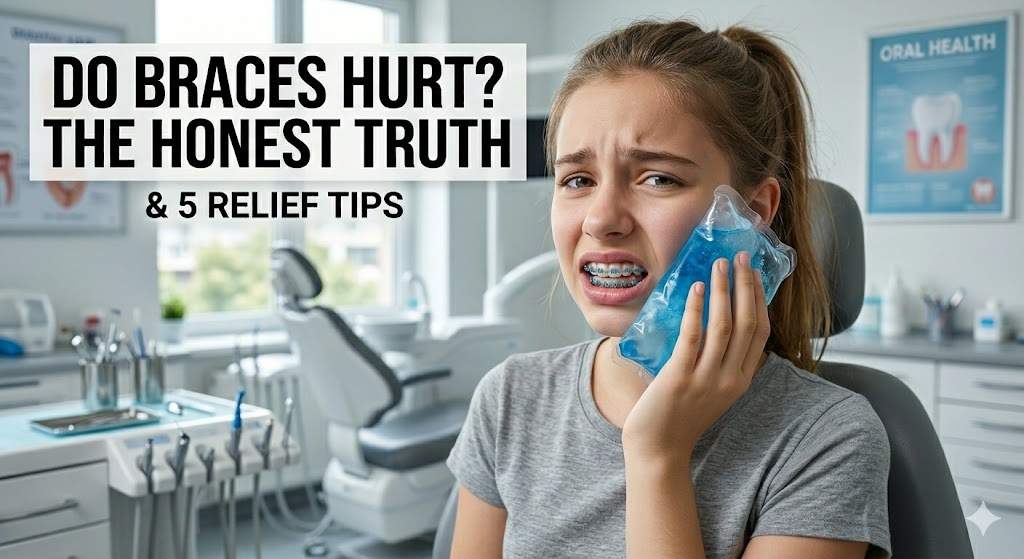
- External Application: If your jaw muscles feel tight and achy, wrap an ice pack or a bag of frozen peas in a thin towel and hold it against the outside of your jaw for 15 to 20 minutes at a time. This can drastically reduce muscular throbbing.
2. Master the Fine Art of Orthodontic Wax
For a vast majority of patients, the absolute worst part of the first week isn’t the deep tooth pressure; it is the sharp brackets scraping against the delicate inside of their cheeks, causing painful ulcers. Your clinic will provide you with several small, rectangular boxes of oral wax (dental wax or silicone wax). Mastering this tool is essential.
- The Perfect Technique: Wash your hands thoroughly. Pinch off a very small piece of wax, about the size of a small green pea. Roll it firmly between your thumb and index finger; the heat of your skin will soften it and make it pliable. Crucial step: Use a tissue or a cotton swab to dry the irritating bracket and the surrounding tooth completely. Wax absolutely will not stick to a wet surface; it will just slide off. Once dry, press the softened ball of wax firmly over the offending bracket, molding it around the edges so it grips the metal. It acts as a remarkably smooth, protective barrier, instantly stopping the friction and giving your cheek sores the necessary peace to heal overnight.
3. Utilize Over-the-Counter Pain Relievers Strategically
If you anticipate pain, the best offense is a good defense. Taking medication for braces pain relief is highly effective, but you must choose the right type. Non-steroidal anti-inflammatory drugs (NSAIDs) like Ibuprofen (Advil, Motrin) are vastly superior to Acetaminophen (Tylenol) for braces pain. Why? Because NSAIDs directly target and reduce the inflammation occurring in the jawbone, whereas Acetaminophen only blocks pain signals at the brain level without treating the underlying swelling.
- The Pro Strategy: Do not wait until your child is crying in pain. Give them the recommended dose of Ibuprofen about 30 to 45 minutes before their orthodontist appointment. By the time the new wires are placed, tightened, and the biological pressure begins, the medication will already be fully active in their bloodstream, effectively blocking the onset of a severe headache or jaw ache. Continue using it strictly according to the package directions for the first 48 hours.
4. Soothe Gum Irritation with Warm Salt Water Rinses
If the inside of the mouth already has tiny cuts, abrasions, or ulcers from the hardware, it can sting terribly, especially when eating anything slightly acidic or salty. A warm salt water rinse is a natural, incredibly powerful antiseptic. Through the process of osmosis, the salt draws out excess fluid and bacteria from the inflamed tissues, promoting rapid cellular healing and significantly reducing gum swelling.
- The Healing Recipe: Dissolve half a teaspoon of regular table salt (or sea salt) into a standard glass of warm (not hot) water. Stir until fully dissolved. Take a large sip and swish the mixture gently and thoroughly around the mouth for a full 60 seconds, focusing heavily on the sore areas where the brackets are rubbing. Spit it out in the sink. Repeat this 3 to 4 times a day, particularly after meals and before bed, during the entire first week.
5. Transition to the Ultimate, Zero-Chew Soft Food Diet
Chewing applies massive, crushing force to teeth that are already hyper-sensitive and tender. Attempting to eat hard, crunchy, or chewy foods during the first few days will instantly trigger shooting pain and could easily pop a bracket off the tooth. Changing the diet is absolutely non-negotiable for the first few days.
Here is a comprehensive cheat sheet for a pain-free, culturally relevant diet in Oman:
| Meal Time | Braces-Friendly (Safe, Soft & Painless) | Foods to Strictly Avoid (Will cause pain or break brackets) |
|---|---|---|
| Breakfast | Scrambled or poached eggs, warm oatmeal, yogurt, fruit smoothies, soft pancakes, soggy cereal. | Hard toast, crusty bagels, nuts, sticky granola, tough bacon. |
| Lunch | Blended lentil soups, mashed potatoes, macaroni and cheese, soft tuna or egg salad, hummus. | Crusty sandwiches, raw carrots, apples (unless sliced paper-thin), hard crackers. |
| Dinner | Soft overcooked pasta, flaky white fish, slow-cooked extremely tender meats (like traditional Omani Harees or very tender, bone-free Shuwa), steamed soft vegetables. | Tough grilled steaks, meat on the bone, corn on the cob, hard taco shells, thick pizza crusts. |
| Snacks | Applesauce, chocolate pudding, ripe bananas, ice cream, jelly, cottage cheese. | Popcorn (the hulls get stuck!), hard candies, chewing gum, sticky caramels, ice cubes, hard pretzels. |
read more:what can kids eat with braces
6. Try Gentle Gum Massage
If your gums feel swollen and tight, a gentle physical massage can stimulate blood flow and provide relief. Wash your hands thoroughly. Using your index finger, gently rub the gums above your upper teeth and below your lower teeth in slow, circular motions. You can also rub a small amount of topical oral anesthetic gel (like Orajel) onto the gums for temporary numbing relief if the pain is acute.
7. Distraction is a Powerful Painkiller
Never underestimate the power of the mind. Sitting on the couch hyper-focusing on the discomfort will only magnify it. Once you have applied wax, taken an NSAID, and had a cold smoothie, the best thing to do is engage in a highly distracting activity. Watch a gripping new movie, play an immersive video game, read a fascinating book, or do a puzzle. Engaging the brain’s cognitive centers naturally dampens its processing of mild pain signals.
Knowing the Red Flags: When Pain is Not Normal
While dull aching and sore cheeks are expected, it is crucial to know when to contact your orthodontist. Braces pain should never be agonizing or intolerable. Look out for these red flags:
- The Poking Wire: If the wire slips out of the back bracket and is actively stabbing into the back of your cheek, causing bleeding and severe pain, do not wait it out. Call the clinic immediately. They can clip it in 5 seconds.
- Unbearable Throbbing: If the pain cannot be managed by over-the-counter medication and is preventing sleep entirely after the third day, the wire may be too thick or the force too heavy.
- Facial Swelling: Noticeable swelling on the outside of the face, accompanied by fever, is a sign of infection, not normal tooth movement. Seek immediate dental care.
Budgeting for the Journey: Understanding the True Value
While managing physical comfort is paramount for patients, parents are simultaneously and heavily invested in the financial aspect of the treatment. High-quality orthodontic care is not merely an expense; it is a profound investment in your child’s long-term oral health, digestion, self-esteem, and future professional confidence.
It is a known fact that attempting to cut corners by choosing unverified, extremely cheap clinics can lead to disastrous results: prolonged treatment times (years longer than necessary), increased pain due to poor, outdated techniques, root damage, and ultimately much higher costs to fix the mistakes made by an inexperienced practitioner.
For a transparent, highly detailed breakdown of what you should expect to invest, including all the hidden factors that influence pricing in the region, check out this essential guide on Kids Braces Cost in Muscat. Understanding the exact cost structure and available payment plans helps you plan your family’s finances effectively, ensuring your child receives the absolute highest standard of care without causing you financial stress or anxiety.
Frequently Asked Questions (FAQs)
We know that despite all the detailed information provided above, parents and patients always have specific, burning questions. We have compiled the most common concerns we hear every day in our Muscat clinic and provided honest, straightforward, and clinical answers.
Does it hurt to take braces off?
Not at all! You can breathe a massive sigh of relief because “Debonding Day” is universally considered the best day of the entire process. The orthodontist uses a special, plier-like tool to gently squeeze the base of each bracket. This breaks the adhesive bond, popping the bracket right off the tooth in a split second. You might feel a tiny bit of pressure or hear a loud clicking or cracking sound (do not panic, this is just the glue breaking, not your tooth!). After the brackets and wires are removed, the doctor will use a high-speed polishing tool to buff away the remaining glue. The whole process is remarkably fast, completely painless, and leaves you running your tongue over a perfectly smooth, beautifully straight smile.
How to sleep when your braces hurt?
Sleeping can definitely be tricky during the first night or two, as lying flat can increase blood flow and throbbing in the head and jaw area.
- Pro tips for sleep: Elevate your head with an extra, thick pillow to reduce the vascular throbbing. Take an anti-inflammatory medication (like Ibuprofen) about 30 minutes right before you get into bed so you sleep soundly through the peak inflammation period. Lastly, be very generous with orthodontic wax. Your mouth tends to dry out when you sleep (especially if you mouth-breathe), which causes the inner cheeks to rest heavily against the metal and rub raw. Cover any slightly sharp bracket with wax before closing your eyes.
Do spacers for braces hurt?
Spacers (also known as separators) are tiny, thick rubber bands that are physically wedged between your tight back molars a week before your braces go on. Their job is to create a tiny gap so the orthodontist can later fit metal anchor bands around the teeth.
- The honest truth? Yes, they can be incredibly annoying and quite uncomfortable. They feel exactly like having a thick, stubborn piece of meat or gristle stuck firmly between your teeth that you cannot floss out. They create a constant, dull, wedge-like ache for a few days. Sticking to a very soft food diet, avoiding sticky foods that could pull them out, and using cold water rinses is the best way to handle spacer discomfort until the appointment.
Do rubber bands on braces hurt?
Later in your treatment, once the teeth are mostly straight, the focus shifts to fixing the bite (how the top and bottom jaws align). You might be asked to hook tiny, tight rubber bands from a bracket on your top jaw to a bracket on your bottom jaw.
- The experience: When you first start wearing them, your jaw muscles and teeth will absolutely feel sore and fatigued because they are being pulled in a new, continuous, diagonal direction.
- The secret to success: Keep wearing them exactly as instructed! If you take them off because they hurt, your teeth and muscles will never adapt, and they will hurt every single time you start wearing them again. Power through the first 48 hours of consistent wear, and the muscle pain will completely vanish.
Do braces hurt more for adults than for children?
Clinically speaking, adults generally experience slightly more discomfort than teenagers. The reason is purely anatomical. A teenager’s jawbone is still actively growing and is relatively porous and pliable, making tooth movement somewhat faster and physiologically easier. An adult’s jawbone is highly dense, calcified, and fully set in its ways. It takes more sustained pressure to trigger the bone remodeling process in adults. However, the pain management protocols (NSAIDs, soft diet, wax) are exactly the same, and the long-term aesthetic and functional benefits make the temporary soreness entirely worthwhile for adult professionals.
I keep biting the inside of my lip with my new braces. Will this stop?
Yes. When your teeth move, your bite changes slightly every week. In the beginning, because the brackets push your lips outward slightly, you may accidentally bite your inner lip or cheek while chewing or speaking. As the teeth align and your facial muscles adapt to the new volume in your mouth, this clumsy biting will completely stop. Until then, chew very slowly and mindfully.
Can I use an electric toothbrush when my teeth are sore?
During the first three days when your teeth are incredibly sensitive to pressure, the intense vibration of an electric toothbrush (like an Oral-B or Sonicare) might feel overwhelming and painful. It is perfectly fine to switch to a manual, ultra-soft bristled toothbrush for the first few days. Use gentle, circular motions. Once the initial tenderness subsides (usually by day 4 or 5), you should absolutely return to your electric toothbrush, as it is far superior at cleaning around brackets and preventing white spot lesions (cavities).
Does playing a wind instrument hurt with braces?
If you play the trumpet, flute, clarinet, or any brass/woodwind instrument, braces will require a significant adjustment period. Pressing the mouthpiece against lips that are resting on metal brackets can be painful and cause cuts. You will need to use a lot of orthodontic wax or purchase specialized lip protectors (bumpers) designed specifically for musicians. It may take a few weeks to regain your normal embouchure (lip position) and stamina, but you will absolutely be able to continue playing. (Note: This is an area where Invisalign holds a massive advantage, as the smooth trays do not cut the lips when playing instruments).
Your Next Steps to a Perfect Smile
The journey to a brilliant, straight, and deeply confident smile does undeniably involve a temporary physical adjustment period. However, the overarching fear of “do braces hurt” should never be the barrier that holds you or your child back from achieving optimal oral health. With the right expert pediatric care, modern, low-friction techniques, and a solid, proactive arsenal of home relief strategies like cold therapy, wax application, and delicious soft foods, the discomfort is merely a small, highly manageable bump in the road.
The single most important factor in guaranteeing a comfortable, anxiety-free orthodontic experience is the empathy and expertise of the specialist handling the treatment. Do not let fear or internet rumors delay your child’s dental health and future confidence. If you are residing in Oman and are ready to explore the most painless, effective, and modern smile correction options available today, it is time to take action.
Schedule a consultation with our renowned pediatric experts in Muscat today. Let us assess your unique situation, discuss the best options ranging from traditional braces to clear aligners, and build a personalized, stress-free treatment plan. Let’s build that healthy, confident smile together!
