
What can kids eat with braces? Top 10 Tips
🧲 Watching your child get their braces is an exciting milestone on the journey to a perfect smile, but the excitement often fades the moment they sit down to try and eat their first meal. The tears, the sheer frustration over chewing discomfort, and the sudden, overwhelming fear of breaking an expensive bracket can turn family dinner time into a highly stressful ordeal for both parents and children alike. If you are staring at your pantry or refrigerator right now, wondering how to keep your hungry child fed, nourished, energetic, and completely pain-free without damaging their delicate orthodontic hardware, you are absolutely in the right place.
An optimized orthodontic diet is not just about aggressively avoiding bad foods; it is about warmly embracing delicious, braces-friendly alternatives that make this massive transition seamless and enjoyable. Starting your family’s journey by consulting with a highly skilled Pediatric Orthodontist Muscat ensures your child receives the absolute best clinical foundation for their treatment. However, what happens in your kitchen—three times a day, every single day—is entirely up to you. This ultimate, comprehensive guide will walk you through exactly what to cook, how to prepare it, and how to master the next few years of orthodontic treatment like a pro.
The Reality of Chewing: Why Dietary Changes Are Non-Negotiable
When orthodontic hardware is bonded to teeth, the entire biomechanics and sensory feedback of the mouth change instantly. The wires, ceramic or metal brackets, and molar bands are engineered to exert constant, highly calculated pressure to shift teeth through the jawbone into their correct aesthetic and functional positions.
🎬 Real-Life Scenario: Imagine your child grabbing their absolute favorite crusty French baguette or a thick slice of pizza after a long day at school. Before braces, they would instinctively tear into it using their front incisors without a single second thought. With braces, the moment they bite down, two catastrophic things happen. First, the immense pressure of tearing the bread transfers directly to the brackets, dramatically increasing the risk of broken brackets and severe wire damage. Second, the heavy resistance of the hard bread pushes forcefully against teeth that are already incredibly sensitive from the orthodontic tension, sending a sharp, shocking wave of pain straight through the jaw.
Parents frequently ask, do braces hurt when children eat? The hardware itself generally causes a dull, manageable ache as the teeth slowly move. However, eating the wrong foods—especially hard, crunchy, or heavily chewy items—can and will trigger acute, sharp pain. This happens because the periodontal ligaments surrounding the roots of the teeth become highly inflamed and hyper-sensitive to pressure during treatment. Implementing a dedicated soft diet plan is the single most effective way to mitigate this issue, offering vital jaw soreness relief while keeping the orthodontic appliance completely intact and preventing emergency visits to the clinic.
The Critical First Week: Navigating Sensitive Teeth Foods
The first week after getting braces initially placed, or the 48 hours immediately following a routine tightening appointment, are universally the most challenging times for any patient. Your child’s teeth will be highly sensitive, and chewing anything with real substance might feel impossible, leading to crankiness and refused meals. During this critical phase, liquid nutrition and ultra-soft meals are your greatest allies.
✅ Actionable Strategy for the First 7 Days:
- Days 1 to 3 (The Liquid & Puree Phase): Stick exclusively to liquids and foods that require absolute zero chewing. Your goal is calories and nutrition without friction. Think nutrient-dense smoothies and shakes, rich bone broths, pureed vegetable soups, and meal-replacement drinks if pediatric orthodontics guidelines allow them. Cold foods for braces pain, such as smooth ice cream, frozen yogurt, or heavily chilled applesauce, act as natural anesthetics. The cold temperatures constrict blood vessels, effectively numbing the gums and significantly reducing painful inflammation.
- Days 4 to 7 (The Mash Phase): As the initial chewing discomfort begins to slowly subside, gradually introduce foods that require minimal, gentle, up-and-down chewing. Soft scrambled eggs cooked with butter, creamy mashed potatoes, over-boiled and well-cooked pasta, and flaky fish like tilapia are excellent transitional choices.
The 7-Day Soft Food Survival Meal Plan
To take the guesswork out of the incredibly stressful first week, here is a complete, orthodontist-approved 7-day meal plan focusing on kid friendly soft meals for braces.
Day 1:
- Breakfast: Classic vanilla protein shake blended with whole milk and a frozen banana.
- Lunch: Creamy tomato bisque (lukewarm, not boiling hot) with a side of cottage cheese.
- Dinner: Chicken broth with very tiny, over-cooked star pasta.
- Snacks: Chilled applesauce pouch.
Day 2:
- Breakfast: The Ultimate Ortho-Smoothie (Banana, peanut butter, Greek yogurt, almond milk).
- Lunch: Pureed butternut squash soup.
- Dinner: Mashed sweet potatoes blended with a little butter and brown sugar.
- Snacks: Plain or vanilla yogurt without any fruit chunks.
Day 3:
- Breakfast: Cooled oatmeal (porridge) mashed completely smooth with honey.
- Lunch: Soft macaroni and cheese (the boxed kind usually has very soft noodles).
- Dinner: Flaky baked cod fish that falls apart with a fork, served with mashed peas.
- Snacks: Sugar-free pudding cup.
Day 4:
- Breakfast: Soft, fluffy scrambled eggs with a dollop of mashed avocado.
- Lunch: Crustless soft bread sandwich with extremely smooth peanut butter and jelly (cut into tiny squares).
- Dinner: Meatloaf made with very fine ground beef, smothered in gravy.
- Snacks: Watermelon chunks (seedless and cut very small).
Day 5:
- Breakfast: Pancakes soaked in syrup so they become mushy and melt in the mouth.
- Lunch: Egg salad (finely chopped) on soft white bread.
- Dinner: Slow-cooked pulled chicken (shredded fine) mixed with mashed potatoes.
- Snacks: A ripe, soft banana.
Day 6:
- Breakfast: Greek yogurt mixed with soft, baked apples and cinnamon.
- Lunch: Cheese quesadilla made with a soft flour tortilla, microwaved instead of crisped on a pan.
- Dinner: Spaghetti with a smooth, meatless marinara sauce (noodles cut up small).
- Snacks: String cheese (bitten with back teeth only).
Day 7:
- Breakfast: Soft scrambled eggs with melted soft cheddar cheese.
- Lunch: Soft chicken nuggets (microwaved to avoid crispy edges) cut into tiny bites.
- Dinner: Soft-baked salmon with steamed, mushy carrots.
- Snacks: Smoothie or milkshake.
The Ultimate Green List: Safe Foods for Kids with Braces
Building a sustainable, long-term orthodontic diet means knowing exactly what is safe to buy at the grocery store. When compiling a grocery list for a child undergoing orthodontic treatment, you must focus relentlessly on tender, easily chewable, and nutrient-dense options. Growing bodies need vitamins and proteins, so you cannot rely on ice cream forever.
🧩 Approved Food Categories Matrix (The Green List)
| Food Category | Best Braces-Friendly Options | Why It Works for Orthodontic Patients |
|---|---|---|
| Dairy Products | Greek yogurt, cottage cheese, soft cheeses (Brie, soft cheddar, mozzarella), whole milk, pudding, milkshakes. | Requires zero to minimal chewing. Crucially, dairy is rich in calcium, phosphorus, and Vitamin D, which fortify tooth enamel against the heightened risk of decay around brackets. |
| Proteins & Meats | Tender meats (slow-cooked chicken, pulled pork), meatballs, meatloaf, soft tofu, flaky fish (salmon, tilapia, cod), refried beans, hummus. | Soft proteins prevent wire damage. Ground meats are significantly easier to process than whole muscle cuts like steak, chops, or chicken breasts. |
| Grains & Carbs | Mashed potatoes, macaroni and cheese, soft cooked rice, soggy pancakes, muffins (strictly without nuts), soft tortillas, soft crustless bread. | Carbohydrates provide essential energy for growing kids. Cooking them thoroughly ensures they break down easily with saliva, minimizing chewing effort. |
| Fruits | Bananas, applesauce, melons (watermelon, cantaloupe, honeydew), grapes (always cut in half), fruit smoothies, baked apples, ripe peaches. | Soft fruits provide essential vitamins (Vitamin C for gum health). Baking hard fruits fundamentally softens their fibrous structure. |
| Vegetables | Steamed carrots, mashed winter squash, boiled spinach, soft green peas, roasted zucchini, steamed broccoli florets. | Boiling or steaming vegetables until they are completely mushy ensures they don’t snap delicate wires or cause sudden bracket detachment. |
Deep Dive: What Meat is Best for Braces?
Many parents struggle with providing adequate protein because traditional meats are tough. When deciding what meat is best for braces, the rule of thumb is: if you can cut it easily with the side of a fork, it is safe.
- Ground Meats: Ground beef, chicken, and turkey are pre-masticated by the meat grinder. Turning these into meatballs, meatloaf, or sloppy joes makes them incredibly braces-friendly.
- Slow Cooker Magic: Cooking tougher cuts of meat in a slow cooker for 8 hours breaks down the collagen and connective tissues. Pulled pork or shredded chicken cooked in a sauce is perfect.
- Seafood: Fish is naturally flaky and lacks the tough fibrous structure of land animals. Salmon, cod, and even canned tuna are fantastic protein sources.
The Danger Zone: The Absolute Red List of Foods to Avoid
Understanding what to avoid is arguably even more critical than knowing what to eat. Orthodontic emergencies—which require taking kids out of school and parents leaving work—are almost always caused by dietary missteps. According to guidelines from the 🌍 American Association of Orthodontists, completely avoiding hard, sticky, and chewy foods is the single most effective method for wire damage prevention and avoiding costly, painful damage to braces.
1. Hard and Crunchy Foods (The Bracket Breakers)
Hard foods exert excessive, concentrated shear force on the delicate composite glue holding the brackets to the tooth enamel. When this glue fails, the bracket pops off.
- Ice: Chewing on ice is the undisputed number one cause of broken braces. It is a severe habit that must be stopped. Let ice melt in the mouth instead.
- Hard Candies: Lollipops, jawbreakers, Jolly Ranchers, and hard peppermints are strictly forbidden. Biting into one will almost certainly break a bracket.
- Nuts and Seeds: Almonds, walnuts, cashews, and popcorn must be eliminated. Popcorn is particularly dangerous because the thin, hard outer husks (kernels) easily slide under the gums and wires, causing massive infections and abscesses.
- Hard Breads: Pizza crusts (the outer edges), bagels, hard French rolls, and croutons require aggressive tearing forces that braces simply cannot withstand.
- Raw, Hard Vegetables and Fruits: Biting directly into a whole apple, a raw carrot, or corn on the cob is a guaranteed recipe for disaster.
- Hard Chips: Thick tortilla chips, Takis, hard taco shells, and thick kettle-cooked potato chips shatter into sharp shards that wedge under wires.
2. Sticky and Chewy Sweets (The Wire Benders)
Sticky foods act exactly like industrial glue. They wrap around wires and pull them completely out of alignment. A bent wire applies pressure in the wrong direction, which can drastically prolong the orthodontic treatment time.
- Caramel and Taffy: These adhere deeply to the intricate parts of the braces and are virtually impossible to clean out, inevitably leading to severe tooth decay.
- Chewing Gum: Unless explicitly approved by your orthodontist (some allow specific sugar-free gums with the ADA seal), traditional bubble gum will tangle horribly in the wires.
- Gummy Bears and Jelly Beans: These soft candies might seem safe, but their incredibly dense, sticky nature can easily dislodge wires from their back molar bands.
- Chewy Protein Bars: Many granola and protein bars are held together by sticky syrups and contain hard nuts, making them a double threat.
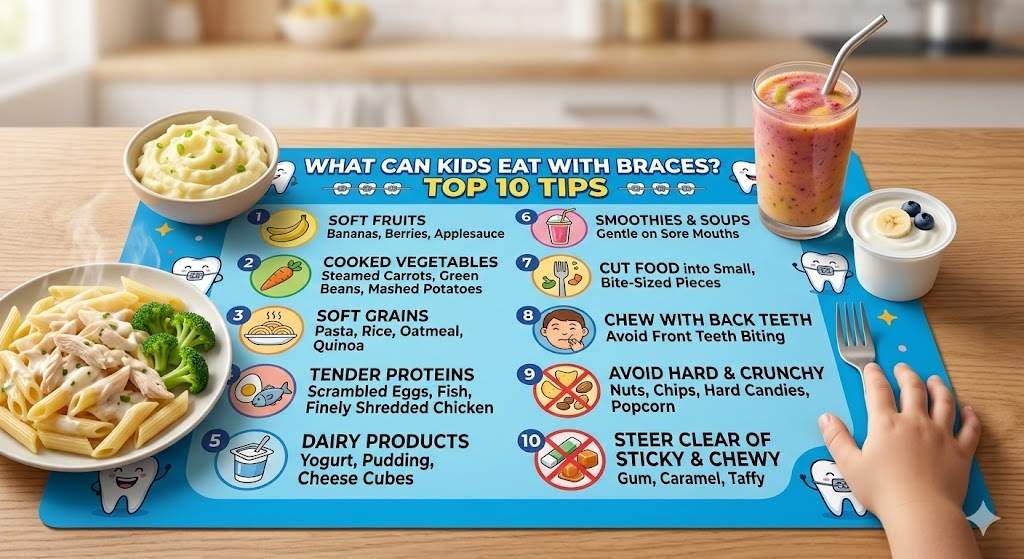
The Top 10 Actionable Tips for Feeding a Child With Braces
To ensure your child stays healthy, emotionally happy, and physically pain-free, here are the top 10 actionable tips for managing an orthodontic diet effectively day in and day out.
1. Cut Everything Into Bite-Sized Pieces
This is the ultimate golden rule of braces safe recipes. Human dental anatomy dictates that we naturally use our front teeth (incisors and canines) to bite and tear food, and our back teeth (molars) to crush and grind it. Braces make using the front teeth incredibly painful and risky. By strictly cutting sandwiches, soft fruits, and soft meats into tiny, bite-sized pieces, your child can use a fork to place the food directly onto their back molars, completely bypassing the sensitive front teeth.
✅ Actionable Tip: Treat your kitchen like a prep station. Invest in a good, clean kitchen shear or a set of very sharp knives. Habitually cut pizza (the soft middle part), soft sandwiches, and even soft fruits into small 1-inch squares before the plate ever hits the dining table.
2. Master the Art of Chewing Slowly
When kids are hungry or distracted by screens, they tend to inhale their food. For braces wearers, rapid eating is highly dangerous. Chewing slowly not only aids in basic digestion but also allows the child to consciously navigate the food around their orthodontic hardware carefully. It prevents accidental cheek biting—a very common issue since the brackets and wires take up extra physical space in the mouth—and helps them identify any hard bits of food before they bite down hard enough to cause damage.
3. Keep Dental Wax on the Dining Table
During the first few months, the delicate inner lining of the cheeks and lips will constantly rub against the metal or ceramic brackets, creating painful, stinging ulcers and canker sores. The muscular action of eating exacerbates this friction significantly.
✅ Actionable Tip: Before a meal, have your child identify the specific brackets that are currently causing irritation and apply a small, pea-sized amount of orthodontic dental wax directly to them. While the wax might occasionally fall off during eating, it provides a crucial, smooth buffer that makes getting through a meal much more physically comfortable. (And don’t worry, swallowing a tiny bit of dental wax is completely harmless).
4. Hydrate Liberally During Meals
Water is a braces wearer’s absolute best friend. Drinking plenty of water while eating serves multiple essential purposes. First, it physically softens the food in the mouth, making it easier to chew and swallow with less jaw effort. Second, it acts as a continuous, high-pressure flush, washing away food particles that inevitably get stuck between the brackets and underneath the wires, preventing embarrassing food-in-teeth moments at school.
5. Redefine Protein Preparations
As mentioned, tough cuts of meat require heavy grinding and tearing. Pivot your family’s dinners entirely toward meats that fall apart. If you are serving steak, it must be cut into microscopic pieces, but it’s generally better to avoid it. Rely on ground meats, stews where meat has cooked for hours, and flaky seafood. This simple switch will stop 90% of meal-time complaints.
6. Transform Fruits and Vegetables with Thermal Heat
Your child absolutely still needs their daily vitamins, but raw carrots and celery sticks are out of the question. The solution is thermal transformation. Steam broccoli until it literally falls apart when touched with a fork. Roast zucchini, eggplant, and bell peppers until they are entirely mushy. If your child loves apples and wants to know about eating apples with braces safely, the answer is to peel them, slice them paper-thin, or bake them with a little cinnamon and butter until they have the warm, soft consistency of applesauce. Blending spinach or kale into dark berry smoothies is another excellent way to hide essential greens without adding any dangerous crunch.
7. Optimize the School Lunchbox
School lunches present a unique, anxiety-inducing challenge because parents are not there to monitor what the child is eating, and kids often trade food with friends, exposing them to restricted items. Packing braces friendly school lunches nut free requires a bit of creativity and planning.
- Thermos Meals: Invest in a high-quality, wide-mouth insulated thermos. Pack warm, soft, comforting meals like macaroni and cheese, thick tomato soup, beef stew, or leftover spaghetti. Warm food is often softer than cold food.
- Soft Sandwiches: When making sandwiches, use the softest, freshest bread available. Remove the crusts entirely (use a cookie cutter for fun shapes). Fill it with smooth peanut butter and jelly, finely mashed egg salad, or very thinly shaved deli turkey.
- Safe Snacks: Include easy, braces friendly snacks for school like yogurt tubes, applesauce pouches, soft cheese cubes, soft-baked muffins, or peeled mandarin orange slices. Avoid sending whole apples, granola bars, or trail mix.
8. Use Cold Therapy for Immediate Relief
When jaw soreness relief is desperately needed—especially after a tightening appointment—cold foods act as natural, tasty anesthetics. The cold temperature physically constricts the blood vessels in the gums, temporarily reducing painful swelling and numbing the pain receptors. Ice cream (strictly without nuts, hard chocolate chunks, or sticky caramel ribbons), chilled smoothies, frozen yogurt, and even simply holding ice-cold water in the mouth for a few seconds can provide rapid relief, allowing the child to relax and eat their meal comfortably.
9. Elevate Oral Hygiene with Braces After Every Single Meal
Eating with braces is only half the battle; cleaning up afterward is just as important. Food gets trapped in the intricate metalwork of braces instantly, turning the mouth into a highly active breeding ground for plaque, bacteria, and acid production. If oral hygiene with braces is neglected, the child risks developing white spot lesions (permanent, highly visible decalcification marks) on their enamel, completely ruining the aesthetic result once the braces are finally removed.
✅ Actionable Tip: Equip your child with a discreet travel toothbrush kit and interproximal brushes (the tiny, pine-tree-shaped brushes that fit under the wires) to take to school in their backpack. Teach them to excuse themselves to the restroom to rinse vigorously with water immediately after eating lunch and to brush gently to dislodge any hidden debris.
10. Stay Prepared for Orthodontic Emergencies
No matter how meticulously you plan a soft diet, accidents will eventually happen. A bracket might pop off while eating a seemingly soft piece of bread, or a wire might snap due to metal fatigue. If a bracket breaks but remains securely attached to the wire via the rubber band, cover it in a large ball of dental wax so it doesn’t slide around and cut the cheek, and contact your orthodontist immediately. Never attempt to cut a poking wire yourself with household clippers unless absolutely necessary (and instructed by a professional), and always prioritize scheduling an emergency appointment to keep the treatment timeline on track.
Navigating the Real World: Parties, Holidays, and Fast Food
Special occasions, birthdays, and eating out can cause severe anxiety for kids with braces, often making them feel isolated or left out. With a little foresight, they can enjoy the festivities just like everyone else.
Can Kids Eat Fast Food With Braces?
Yes, absolutely, but choices must be highly deliberate. If navigating fast food options for braces, you must skip the crispy, deep-fried chicken sandwiches, hard taco shells, and thick, crunchy crust pizzas.
- Burgers: When figuring out how to eat burgers with braces, order a classic, single-patty hamburger on a soft bun. Do not let them bite into it! Ask for a knife and fork, or tear it into small pieces for them.
- Chicken: Opt for soft chicken nuggets (if the breading isn’t overly hard or over-fried) instead of crunchy tenders. Can you eat chicken nuggets with braces? Yes, but bite them with the back teeth or cut them in half first.
- Sides: Mashed potatoes (KFC style), macaroni and cheese, and soft french fries are generally very safe. Avoid extremely crispy or over-fried fries that can act like hard chips.
Holiday Dinners and Sweets
During holidays like Thanksgiving or Christmas, focus heavily on the soft side dishes. Mashed potatoes, soft stuffing, cranberry sauce, sweet potato casserole, and soft, slow-roasted turkey are perfectly safe and filling.
When it comes to desserts for kids with braces (especially during Halloween or Valentine’s Day), you must become the candy police. Skip the peanut brittle, candy canes, chewy caramels, and sticky gummies. Instead, indulge them in soft, moist cakes, pies (strictly without hard, crunchy crusts), creamy puddings, Jell-O, and ice cream.
If they want candy, soft candy for kids with braces includes plain milk chocolate bars, peanut butter cups (like Reese’s), or peppermint patties, as these melt quickly in the mouth without requiring forceful chewing.
The Transition: Clear Aligners vs. Braces
Some parents, upon seeing the extensive dietary restrictions and hygiene requirements for traditional metal or ceramic braces, wonder if there is an easier, less restrictive way. When comparing clear aligners vs braces (such as the popular Invisalign system), the dietary aspect is arguably the most massive differentiating factor.
Clear aligners are completely removable. This means that during meal times and snack times, the child simply takes the plastic trays out of their mouth, places them securely in a hard protective case, and can eat absolutely anything they want. There are zero dietary restrictions. They can eat whole apples, crusty French bread, popcorn, and sticky candies without fear of breaking hardware.
However, there is a catch. Aligners require incredibly strict patient compliance. They must be worn for exactly 20 to 22 hours every single day to be effective. Furthermore, the child must perform immediate, thorough brushing and flossing after every meal before putting the trays back in to prevent trapping sugar against the teeth. For many young children, tweens, and early teens who might lack this level of rigorous discipline, traditional braces—despite the strict dietary red list—remain the most effective, reliable, and foolproof treatment method simply because they cannot be forgotten in a lunchroom napkin or lost.
📚 Frequently Asked Questions (FAQs) About Your Child’s Orthodontic Diet
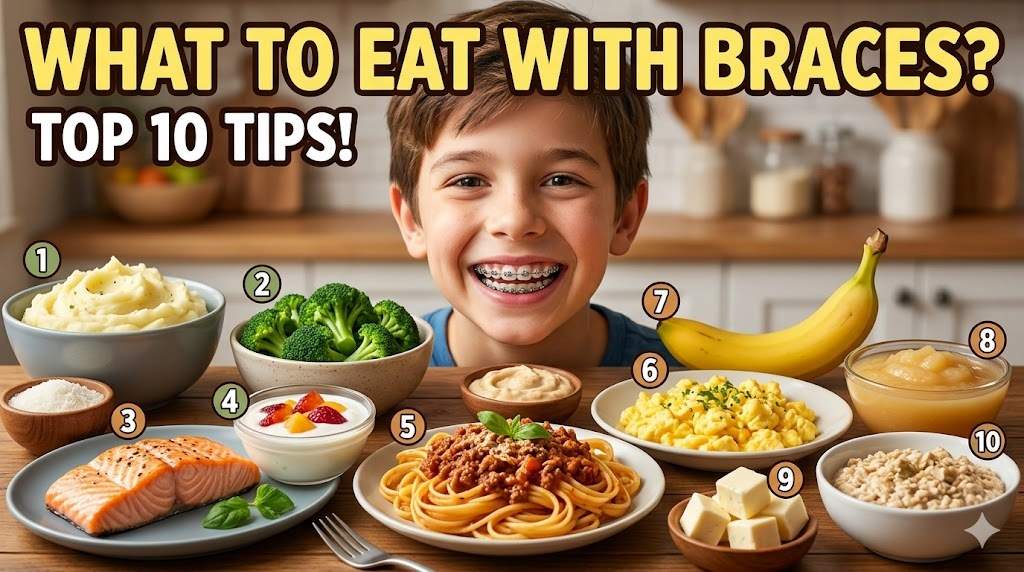
To ensure you have every piece of information at your fingertips, here is an expansive FAQ covering the most common, real-world questions parents have.
Can kids with braces eat pizza?
Yes, but with vital modifications! The primary danger of pizza is the hard, chewy, leathery crust. To make pizza safe, choose thin or soft crust options. You must completely avoid eating the thick outer edge. The best, safest approach is to use a pizza cutter to dice the softer, cheese-covered middle portion of the pizza into small, bite-sized pieces and have the child chew carefully with their back molars.
What to eat first week of braces for kids when they cry and refuse everything?
If your child is in significant, acute pain and flat-out refusing to eat solid foods, do not force the issue. Rely heavily on liquid nutrition for a few days. High-calorie smoothies packed with protein powder, whole milkshakes, creamy soups, and drinkable yogurts can sustain their energy levels until the jaw pain subsides. Emphasize cold foods; the chilling effect will help numb their mouth, making them much more willing to consume calories.
Are potato chips, Takis, and nachos safe?
No, absolutely not. Thin potato chips, hard baked chips, and tortilla chips used for nachos are extremely brittle. When bitten, they shatter instantly into sharp, hard, dagger-like pieces that can very easily wedge themselves deep under the wires or slice into the gums between the brackets, causing severe irritation, bleeding, and potentially snapping the delicate ligature wires that hold the main archwire in place.
Can my child eat chocolate with braces?
Absolutely! Chocolate is widely considered one of the best soft candy for kids with braces. Plain milk chocolate, white chocolate, or dark chocolate (provided it is completely free of nuts, nougat, or sticky caramel) melts rapidly in the warm environment of the mouth and requires almost zero pressure to chew. Just ensure they brush their teeth thoroughly and promptly afterward to prevent the sugar from sitting on the enamel and causing cavities around the brackets.
How do I pack braces-friendly snacks for school without causing a fuss?
Focus on items that require minimal preparation from you and zero hard chewing for them. Great, easy options include string cheese (peeled, not bitten), peeled and thinly sliced soft fruits (like bananas or very ripe, mushy pears), yogurt cups, soft-baked oatmeal bars (no hard nuts), and applesauce pouches. Always remind them to rinse their mouth vigorously with water at the water fountain immediately after finishing their snack.
Is it safe to eat burgers and hot dogs at a barbecue?
Yes, burgers and hot dogs are generally considered safe because the meat is ground and the buns are typically very soft. However, you must not let your child bite directly into a massive, thick burger, as this puts immense, dangerous pressure on the front brackets. Always use a knife and fork to cut the burger or hot dog into manageable pieces and encourage back-tooth chewing.
How long does the severe chewing discomfort actually last?
Typically, the most intense soreness lasts for about 3 to 7 days after the initial placement of the braces. After routine tightening appointments (which happen every 4 to 8 weeks), they will experience a milder version of this pain lasting 1 to 3 days. Sticking strictly to a soft diet plan during these specific windows significantly reduces the overall duration and intensity of the discomfort.
What exactly should I do if a bracket comes loose while they are eating?
First, don’t panic. This is a very common orthodontic emergency. If the bracket is still loosely attached to the wire (usually held by the tiny rubber band), leave it alone, but cover it entirely with a generous piece of dental wax to prevent it from sliding around and cutting the inside of the cheek. Call your orthodontist the next morning for an emergency repair. If the bracket comes completely off the wire and falls into their mouth, have them spit it out, save it in a small tissue or ziplock bag, and bring it to your repair appointment.
Can they eat soft bread for kids with braces?
Yes, but the key word is soft. Plain white bread, soft wheat bread without seeds, and soft brioche buns are fine. However, toast is often too crunchy, and crusty artisanal breads are too chewy. Always cut the crusts off sandwiches to be safe.
Are there specific best soft foods for braces tightening days?
On tightening days, revert to the “First Week” rules. Smoothies, mashed potatoes, and ice cream are the absolute best choices. Anticipate the pain and have a batch of soft soup ready for dinner that night.
What is the best way to handle school parties or Halloween?
Communication is key. Talk to the teacher beforehand to ensure soft treats (like cupcakes or soft cookies) are available. For Halloween, institute a “candy trade-in” program at home. Allow them to trade their dangerous, sticky, and hard candies for braces-safe treats (like chocolate bars or peanut butter cups) or even a small toy or gift card.
Will my child lose weight because they can’t eat hard foods?
It is common for children to eat slightly less during the first week due to soreness, but significant weight loss should not occur if you are providing calorie-dense soft foods. Incorporate healthy fats (avocados, full-fat dairy, smooth nut butters) into their smoothies and meals to ensure they are getting enough energy for growth and development.
📢 Ready to Ensure a Smooth, Pain-Free Orthodontic Journey?
Navigating your child’s complex dietary needs with braces doesn’t have to be a daily, frustrating struggle. By actively stocking your kitchen with the right soft foods, mastering the art of bite-sized preparations, and understanding exactly what danger items to avoid, you can confidently protect their developing smile and keep them completely pain-free.
If you are noticing persistent, severe pain that doesn’t subside after a week, frequent broken hardware despite following the rules, or if you simply need expert, highly personalized guidance on managing your child’s orthodontic treatment, immediate professional support is just a quick message away.
Reach out to our specialized pediatric orthodontic team today via WhatsApp at +968 95380267 to schedule a comprehensive consultation or to get rapid emergency advice. Your child’s perfect, healthy, and confident smile is our absolute highest priority!
