Close a Tooth Gap: 4 Fixes That Work in Muscat
Maybe it's a small space between your two front teeth that shows up in every photo. Maybe you've been told it's "just genetics" and left it alone for years. Either way, closing a gap between teeth (diastema) is one of the simplest cosmetic fixes in dentistry — but only if you pick the right method for your specific gap. Here's what actually works in Muscat, what it costs, and how to avoid paying for the wrong fix.
A gap between the front teeth, known clinically as a diastema, is one of the most common reasons people book a first cosmetic consultation — and one of the most misunderstood. Some patients are quoted a full set of eight veneers for a gap that a single 45-minute bonding session could close. Others are sold a quick bonding fix for a case that will reopen within a year because nobody checked why the gap formed in the first place. The right answer depends entirely on the size of the gap, how many teeth are involved, and what's actually causing it.
This guide walks through the four real ways to close a tooth gap available through cosmetic dentistry in Muscat, what each one actually costs, how long it lasts, and — most importantly — how to know which one fits your case instead of just picking whichever a clinic happens to sell the most of.
Not sure which fix is right for your gap?
Send a photo of your smile and get a straight answer before you book anything.
Why Do You Have a Gap Between Your Front Teeth?
Before choosing a fix, it's worth understanding why the space is there, because the cause changes which treatment actually lasts. The most common reasons include:
- Tooth-to-jaw size mismatch. When the teeth are naturally smaller than the jawbone that holds them, extra space is left over — the most common and purely cosmetic cause, with no underlying problem to treat.
- An oversized labial frenum. The small tissue band connecting your upper lip to your gum can sometimes extend too far down between the front teeth, physically wedging them apart. This one often needs a minor frenectomy alongside cosmetic treatment, or the gap tends to return.
- Missing or undersized lateral incisors. If the teeth next to your front two are smaller than average or missing, the front teeth can drift and leave a visible space.
- Tongue-thrust habits. Repeatedly pushing the tongue against the back of the front teeth while swallowing or speaking can slowly push them apart over years.
- Gum disease or bone loss. Less common, but if teeth loosen and shift due to periodontal issues, gaps can appear — this cause needs to be treated medically before any cosmetic fix, or the new fix will fail too.
A short exam (sometimes with an X-ray) is enough for a dentist to tell which of these applies to you, which is the single most important step before choosing between the four options below.
🧩 The 4 Real Ways to Close a Diastema
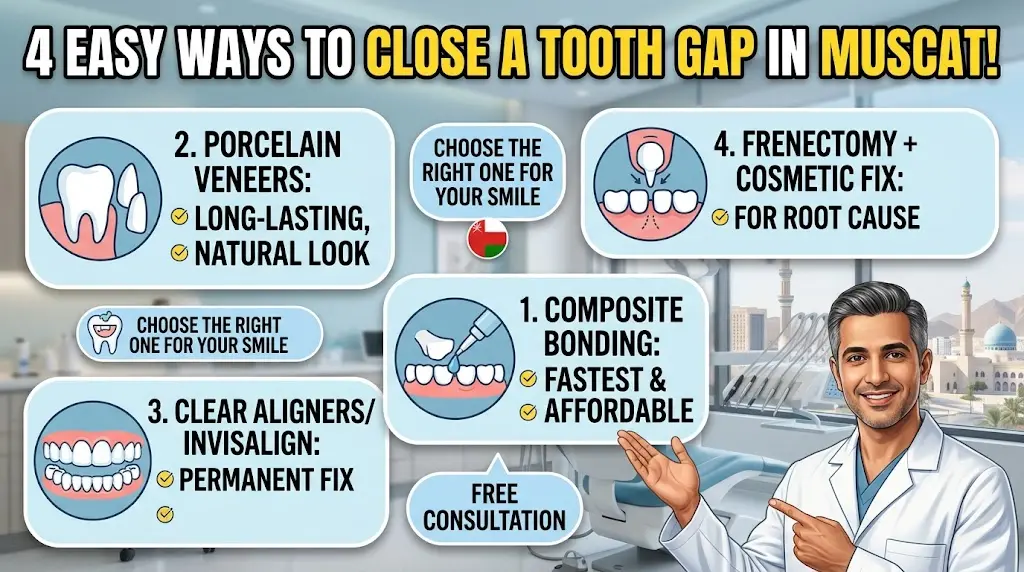
1. Composite Bonding — Fastest and Most Affordable
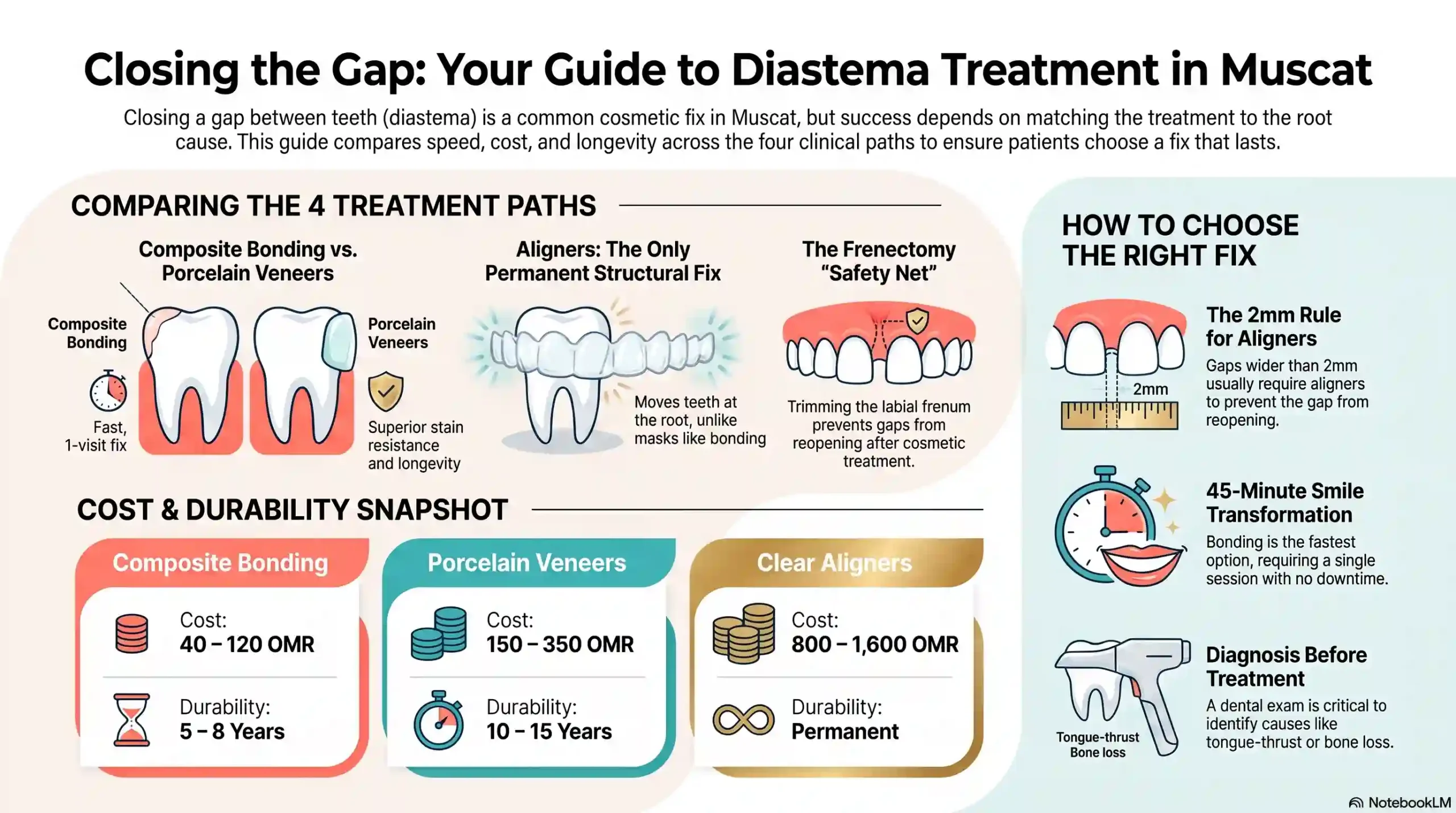
A tooth-colored composite resin is sculpted onto the edges of the two teeth facing the gap, widening them just enough to meet in the middle. It's done in a single visit, requires little to no removal of natural tooth enamel, and is fully reversible if you ever change your mind. The trade-off is durability — bonding can chip or stain over time and typically needs a touch-up or replacement every 5 to 8 years.
2. Porcelain Veneers — Longer-Lasting, More Natural Light Reflection
For a gap combined with other concerns — slightly uneven shape, minor staining, or a size mismatch between the front teeth — a thin porcelain shell bonded to the front surface can close the space while also reshaping the tooth. Dental veneers in Oman resist staining far better than composite and hold their shape for 10-15 years, making them the go-to option when a gap is only one part of a bigger cosmetic goal.
3. Clear Aligners or Braces — The Only Option That Actually Moves the Teeth
Bonding and veneers cover the gap; they don't close it at the root. For wider gaps, spacing between several teeth, or a bite issue contributing to the spread, Invisalign in Muscat gradually and predictably brings the teeth together over several months, closing the space permanently at the source rather than masking it. It takes longer and costs more upfront, but it's the most stable long-term fix for anything beyond a small single gap.
4. Frenectomy Combined With a Cosmetic Fix
If an oversized labial frenum is the actual cause, a quick, low-discomfort procedure to trim or reposition that tissue is usually done alongside orthodontic treatment or before bonding, so the space doesn't quietly reopen a year or two later. Skipping this step when it's genuinely needed is the single most common reason a "successful" gap closure fails within a few years.
What Closing a Tooth Gap Costs in Muscat
Price depends almost entirely on which of the four options fits your case, not on the clinic you choose — a wide gap that genuinely needs aligners will cost more everywhere, while a small single-tooth gap should never be quoted at aligner-level prices. These ranges reflect what Muscat clinics typically quote once the right method is identified.
| Treatment | Typical Cost (OMR) | Best For |
|---|---|---|
| Composite bonding | 40 – 120 | Small single gap, quick fix |
| Porcelain veneer (per tooth) | 150 – 350 | Gap plus shape/color concerns |
| Clear aligners (Invisalign) | 800 – 1,600 | Wider gaps, multiple teeth, bite issues |
| Frenectomy (if needed) | 80 – 200 | Cases with an oversized labial frenum |
A consultation with a few photos or an intraoral scan is the only reliable way to know which row of this table actually applies to you.
Want a real cost estimate for your specific gap?
A quick photo review usually rules out at least two of the four options right away.
Why the Cheapest Bonding Quote Often Doesn't Last
Bonding is genuinely the most affordable fix, but it's also the easiest to rush. A budget provider building up composite quickly, without properly shaping the contact point between the two teeth or checking your bite first, often produces a result that looks fine for the first few months and then chips, discolors, or reopens at the edge within a year.
The same shortcut shows up with frenectomy cases: skipping that step entirely to save time and cost is how a "quick and cheap" gap closure quietly reopens 12-18 months later, forcing the patient to pay for the fix twice. A dentist who asks about your frenum and bite before recommending bonding is doing the diagnostic work that actually makes the cheap option hold up.
What the Process Actually Feels Like
Bonding requires no anesthetic for most patients — the surface of the tooth is lightly roughened, the resin is layered and shaped, then hardened with a curing light, all in a single sitting with no downtime. Veneer preparation involves shaving a very thin layer of enamel under local anesthetic, so most patients feel pressure rather than pain, with mild sensitivity for a day or two afterward.
Clear aligners cause a dull, tight pressure for the first day or two after switching to each new tray — normal and a sign the teeth are actually moving, not a red flag. A frenectomy, when needed, is a short procedure under local anesthetic with a recovery period of about a week, similar to a minor gum treatment.
Closing the Gap Without It Looking "Done"
The most common complaint after a rushed gap closure isn't that it failed — it's that the two front teeth suddenly look unnaturally wide or square compared to the rest of the smile. A well-planned fix widens the teeth just enough to meet in the middle while keeping the proportions believable, sometimes previewed in advance through Digital Smile Design in Muscat so you can see how the new tooth shape will actually look against your lips and face before anything is bonded.
This planning step matters more for gap cases than almost any other cosmetic treatment, because even half a millimeter of over-correction on both sides of the gap is enough to visibly change the width of your two front teeth.
Who Should Skip Bonding and Go Straight to Aligners
Bonding and veneers are the right first option for the majority of small, single-gap cases. But if your gap is wider than roughly 2mm, if there's spacing between more than just the two front teeth, or if a dentist identifies a bite issue actively pushing the teeth apart, covering the space cosmetically without correcting the underlying movement usually means the gap partially reopens beside the new bonding or veneer within a couple of years.
Patients booking through a cosmetic dentistry clinic in Al Mouj or elsewhere in Muscat should expect an honest recommendation toward aligners first in these wider cases — even though it's a longer and pricier path — because it's the only one of the four options that actually resolves the cause instead of just the appearance.
Making Gap Closure More Affordable
Because bonding and frenectomy sit at the lower end of the cost range, gap closure is one of the more accessible cosmetic fixes even without financing. For aligner cases, most Muscat clinics offer monthly installment plans that spread the cost across the treatment timeline rather than requiring the full amount upfront — a practical option given aligner treatment for a gap can run several months.
If budget is tight and the gap is small, starting with bonding as an interim fix while saving toward veneers or aligners later is also a reasonable, low-risk way to phase the investment.
🎬 A Real Example: Choosing the Right Fix Over the Fastest One
The following is an illustrative, anonymized composite example based on typical patient journeys reported by clinics in Muscat — not a specific named patient.
A man in his late twenties had a roughly 3mm gap between his front teeth that he'd had since his teens. He asked a clinic to bond it closed the same week, but the dentist noticed the gap was wider than typical bonding cases and flagged a slightly protruding labial frenum as the likely cause.
Instead of bonding over the problem, the clinic recommended a short frenectomy followed by four months of clear aligners to close the space at the root. It took longer than the same-week fix he'd originally wanted, but two years later the gap has stayed fully closed with no bonding, no veneers, and nothing to maintain — a result the quick bonding fix likely wouldn't have held onto for more than a year or two.
✅ Keeping the Gap Closed Long-Term
- 1. Wear your retainer if you had aligners. Teeth that have just been moved will drift back toward the old gap within months without consistent retainer use, especially in the first year.
- 2. Avoid biting hard foods directly on bonded edges. Composite is durable but more chip-prone than natural enamel at a thin edge — cut apples and hard bread rather than biting straight in for the first few weeks.
- 3. Get bonding checked every 12 months. A quick polish or minor touch-up during a routine cleaning keeps the edge smooth and prevents staining from building up in tiny surface cracks.
- 4. Address a tongue-thrust habit if you have one. If that was flagged as a contributing cause, a short course of myofunctional therapy alongside your cosmetic fix meaningfully reduces the odds of the gap slowly reopening.
- 5. Don't skip your six-month dental checkup. Gum health around the treated area is what keeps any of these four fixes stable for the long run.
🌍 What the Research Says About Diastema Closure
A long-term clinical study following direct composite restorations used specifically for midline diastema closure found strong retention rates over several years of follow-up, supporting bonding as a durable option for correctly selected cases rather than a purely short-term fix. You can read the full findings in the peer-reviewed long-term clinical evaluation of direct composite restoration for midline diastema closure, published via the National Library of Medicine's PubMed Central database.
Choosing a Clinic That Diagnoses Before Recommending a Fix
The clearest sign of a clinic worth trusting with a gap case is a dentist who checks your bite and frenum before pitching bonding, veneers, or aligners — not one who quotes a price before even looking at what's causing the space. Our Top 10 Cosmetic Dental Clinics in Oman for 2026 roundup is a solid starting point for comparing a few options before committing to any one treatment path.
📚 Frequently Asked Questions
Yes, for most cosmetic gaps under about 2mm, composite bonding or a porcelain veneer can close the space in a single visit with no orthodontics at all. Braces or clear aligners are usually only needed when the gap is wider, when there are multiple gaps between several teeth, or when an underlying bite or jaw issue is causing the spacing in the first place.
Composite bonding for a single gap typically runs 40 to 120 OMR, a porcelain veneer runs 150 to 350 OMR per tooth, and clear aligner treatment for gap correction runs roughly 800 to 1,600 OMR depending on how many teeth need to move. A consultation with photos or a scan is the only way to get an exact price for your specific gap.
Bonding and veneers close the visible gap permanently, but they don't address the underlying cause the way orthodontics does. If an oversized labial frenum or a tongue-thrust habit is pushing the teeth apart, the gap can gradually reopen unless that root cause is treated first, which is why a proper diagnosis matters more than the fix itself.